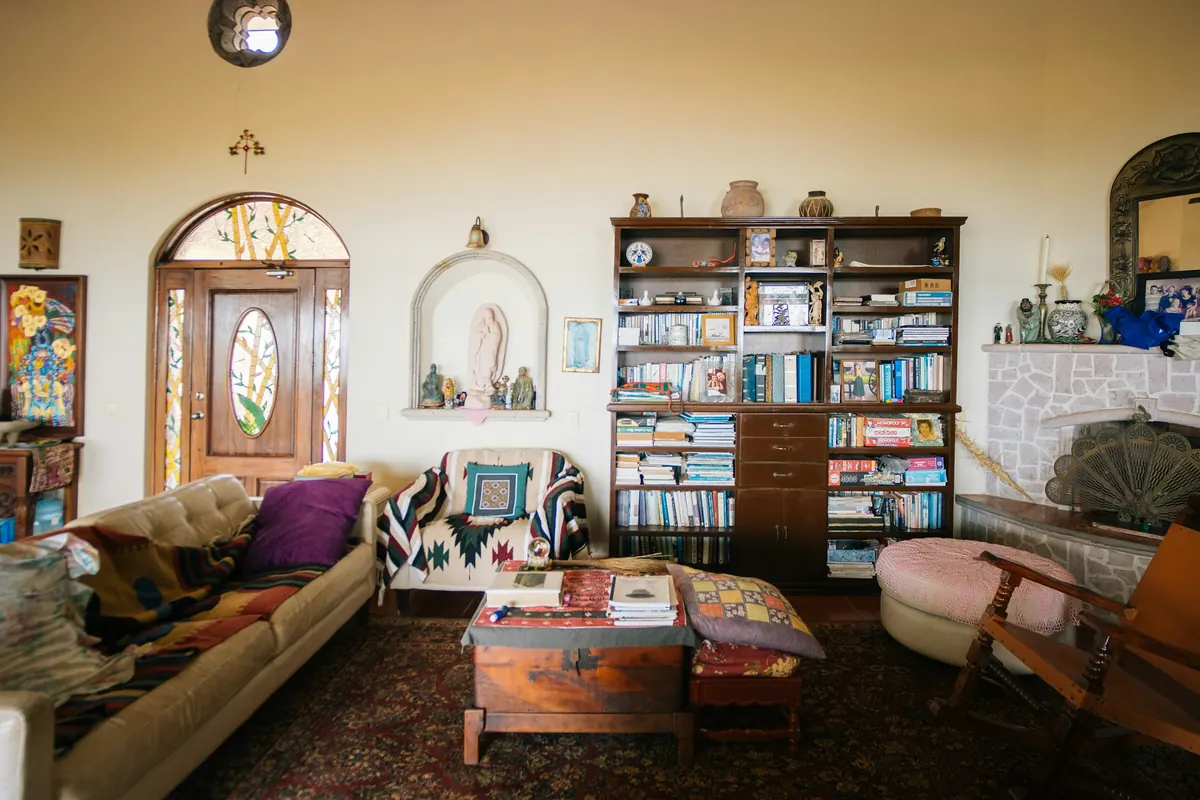
It's 4:22 on a Sunday afternoon.
The front door closes with a familiar click. There's a coat over the chair, a half-finished book on the coffee table, and sunlight stretching across the floor.
On the wall hangs an old mirror with a slightly worn wooden frame. It isn't particularly grand. The glass has a few marks, and one corner has been repaired.
Nobody would mistake this apartment for a museum. And that's precisely why it works.
There's something wonderful about rooms where objects from different decades coexist without demanding attention. An old chair beside a contemporary table. A ceramic pitcher holding fresh flowers. A framed picture that has survived several changes of address.
These objects don't necessarily match. They belong.
The trick isn't to make everything look old. It's to give older things a meaningful place in a contemporary life.
Why vintage feels right again
Vintage and antique pieces have returned to the center of the design conversation.
Perhaps part of the appeal is that an older object can offer something a newly coordinated room sometimes lacks: difference. A different material. An unusual proportion. A surface that has been touched, repaired, or simply lived with.
But history alone isn't enough to make a room beautiful. What matters is how the object fits into the life happening around it.
Imagine we're visiting a home where nothing was collected all at once. Some objects were inherited. Others were found secondhand, moved from room to room, or kept simply because their owners liked them. These ideas work just as well in seven corners of a small apartment.
Let's begin at the door.
01 · The entrywayThe mirror that greets you
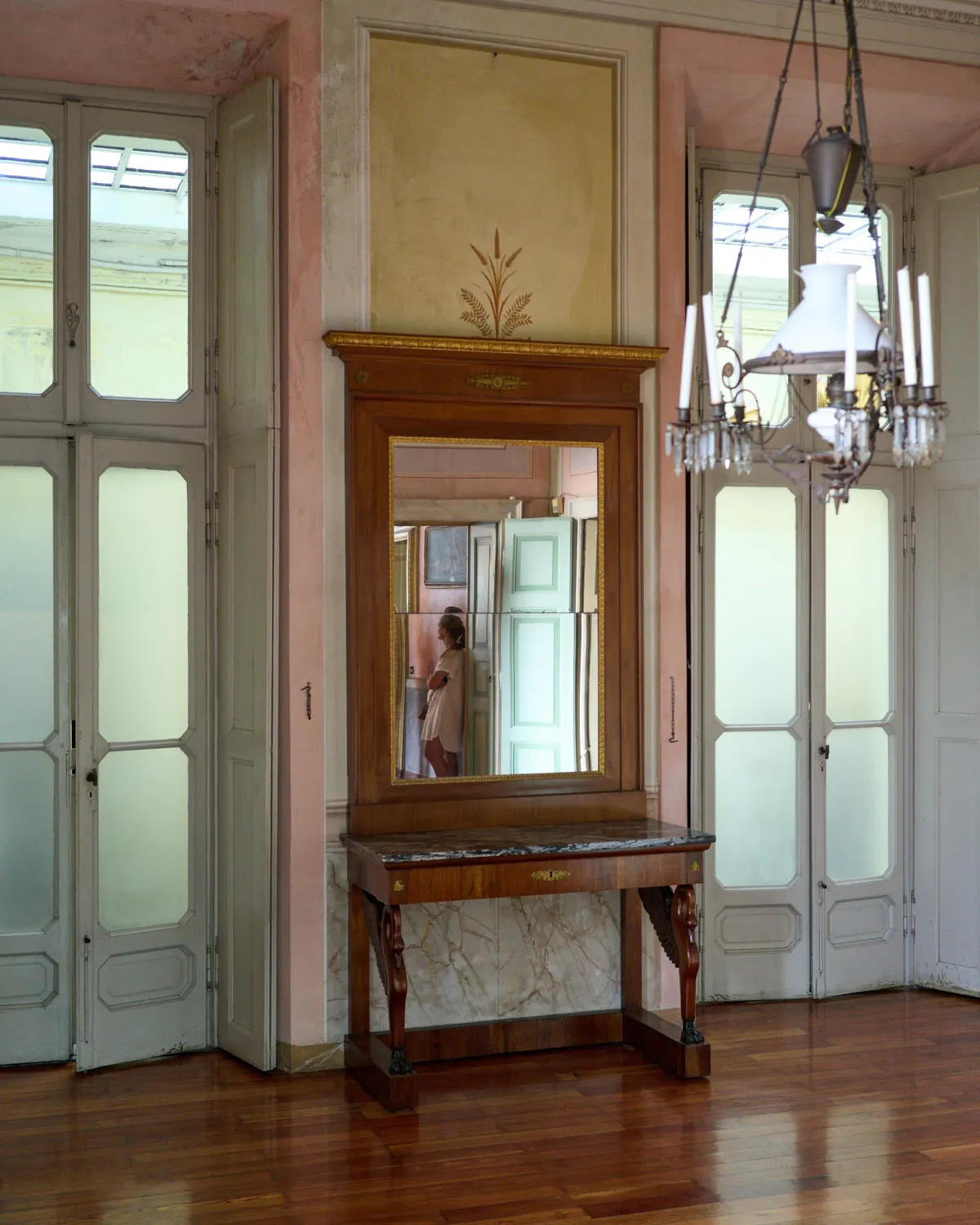
A vintage mirror hangs above a simple console. Its frame has a little character, but the surface below is practical: a bowl for keys, somewhere for the mail, space to put down a bag.
The mirror doesn't need matching sconces, an antique table, or a collection of equally old objects. It needs a useful setting.
The idea to borrow: Pair one expressive older piece with something uncomplicated. Keep the area around it functional. The entrance should welcome the people who live there, not introduce a historical exhibition.
02 · The living roomThe side table with a past
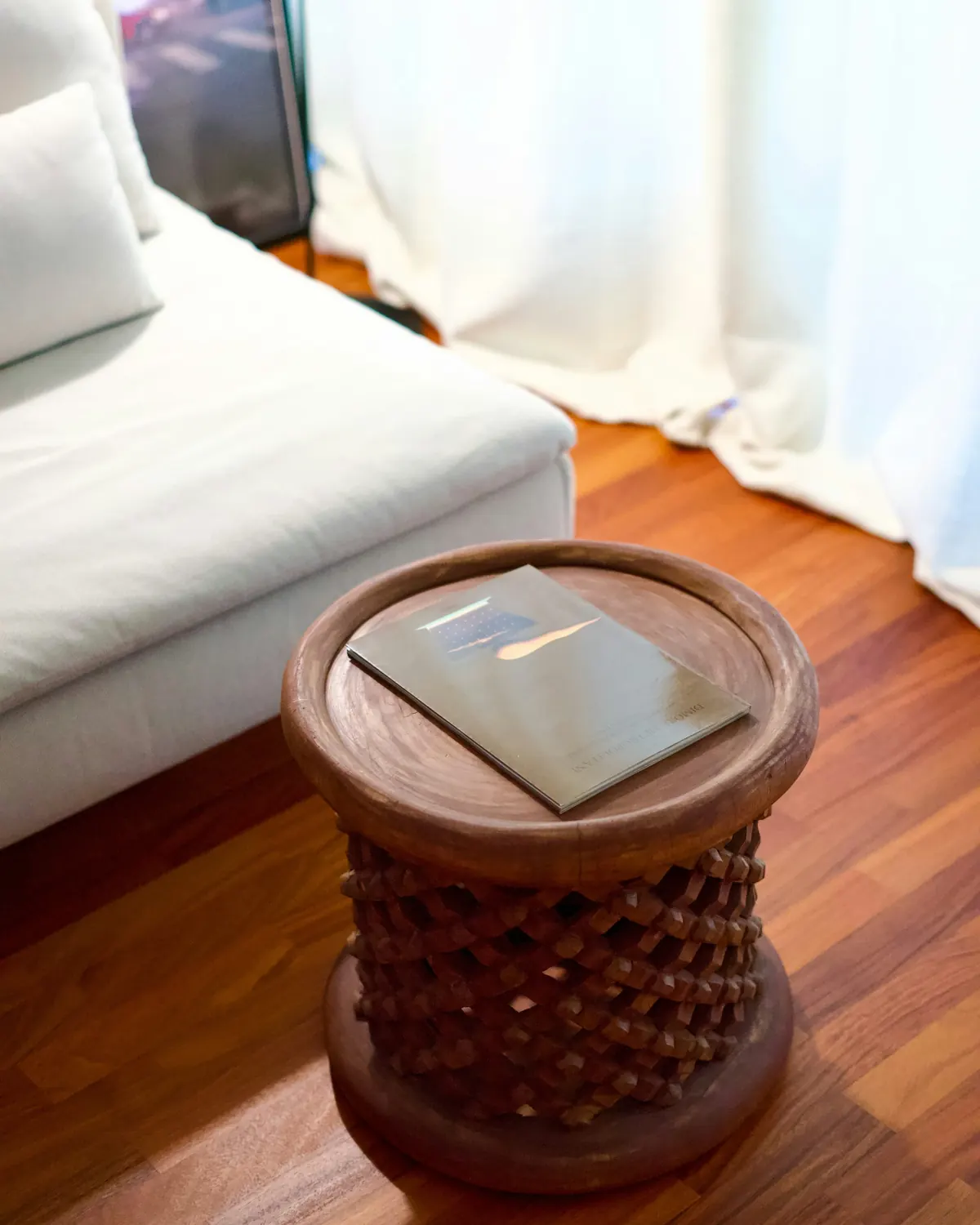
Beside the sofa sits a wooden side table with a few scratches. It isn't the same style as the sofa. Its legs are slightly more decorative than anything else in the room.
But the height is right for a cup of tea, and the small surface holds the book someone is reading. There's nothing precious about its role. That's the point.
The idea to borrow: Give vintage furniture an actual job. A useful piece becomes part of everyday life rather than an object everyone has to walk around carefully.
03 · The dining roomThe chair that doesn't match
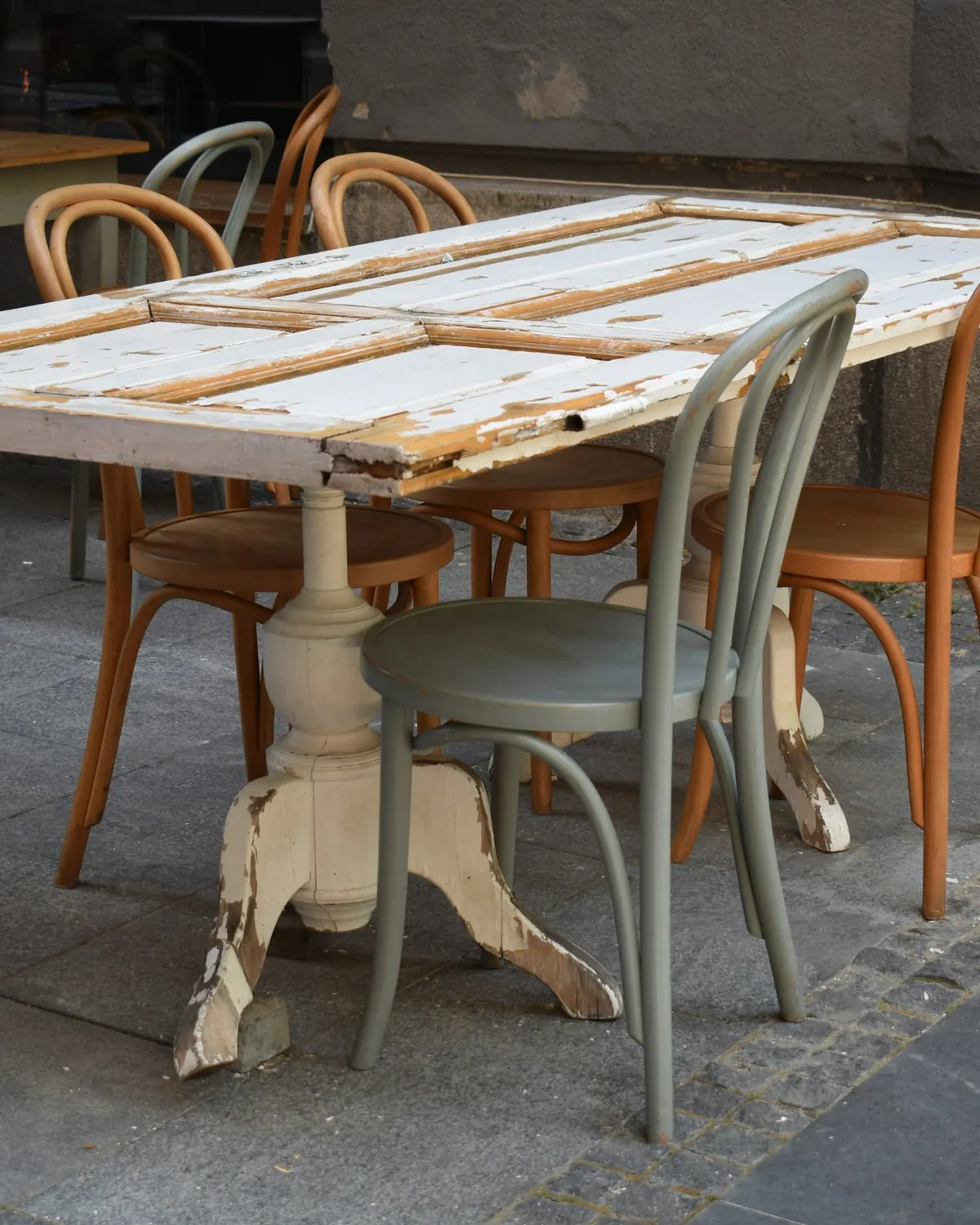
Around the dining table, most chairs are simple. One is older. Its backrest has an unexpected shape, and the wood has darkened with use. It stands beside the others without pretending to belong to the same set.
When friends arrive, nobody asks why it's there. They simply pull it out and sit down.
The idea to borrow: One mismatched chair can add personality without turning the dining room into an exercise in eclectic styling. Make sure it's stable and comfortable; character isn't much use if someone is afraid to sit.
04 · The kitchenThe pitcher that found another purpose
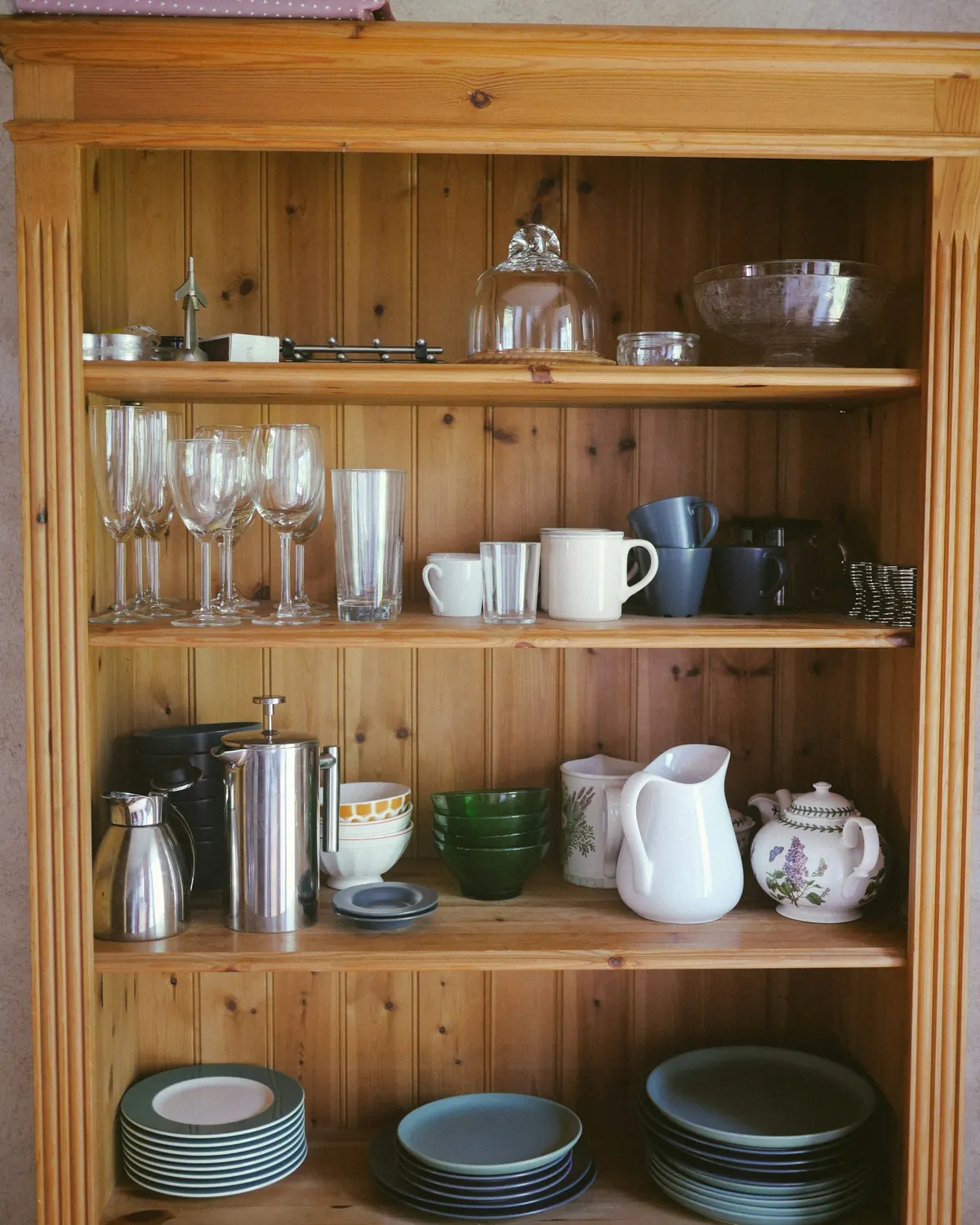
On an open shelf sits an old ceramic pitcher. It may once have held water or milk. Today, it holds a few branches.
The glaze is imperfect, the shape is generous, and it looks perfectly natural among the everyday glasses and plates. It doesn't need a special display.
The idea to borrow: Let older objects have new, appropriate uses. A decorative vessel can hold flowers even when its suitability for serving food or drinks is unknown.
05 · The bedroomThe textile that stayed
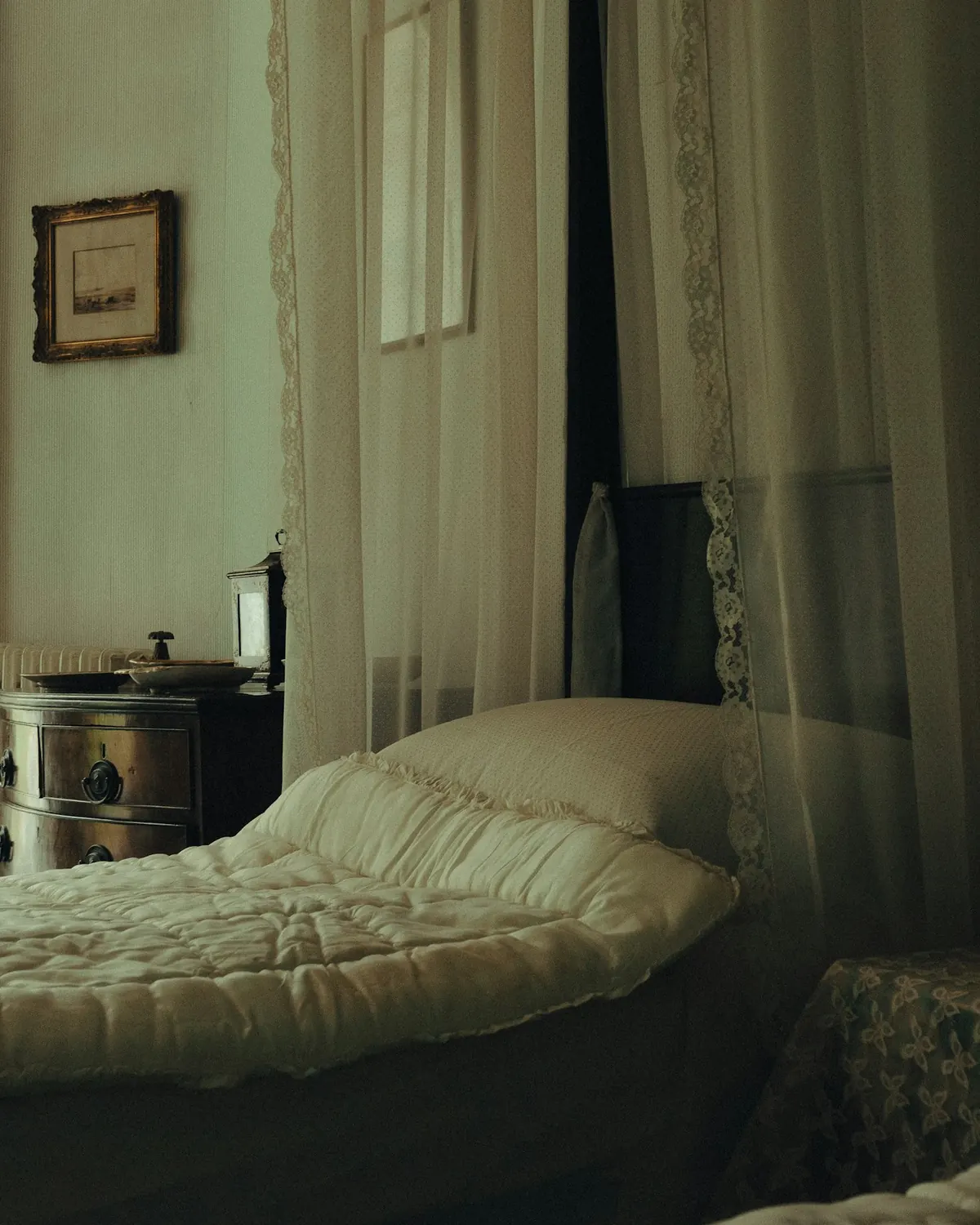
At the end of the bed lies an old coverlet. It's not quite the same color as the curtains. The pattern belongs to a different era from the clean-lined bedside tables.
But it softens the whole room. A slightly faded pattern can feel more personal than a perfectly coordinated set.
The idea to borrow: Try one older textile with contemporary bedding. Let it add texture rather than demanding that every cushion and curtain match.
06 · The work cornerThe desk organizer
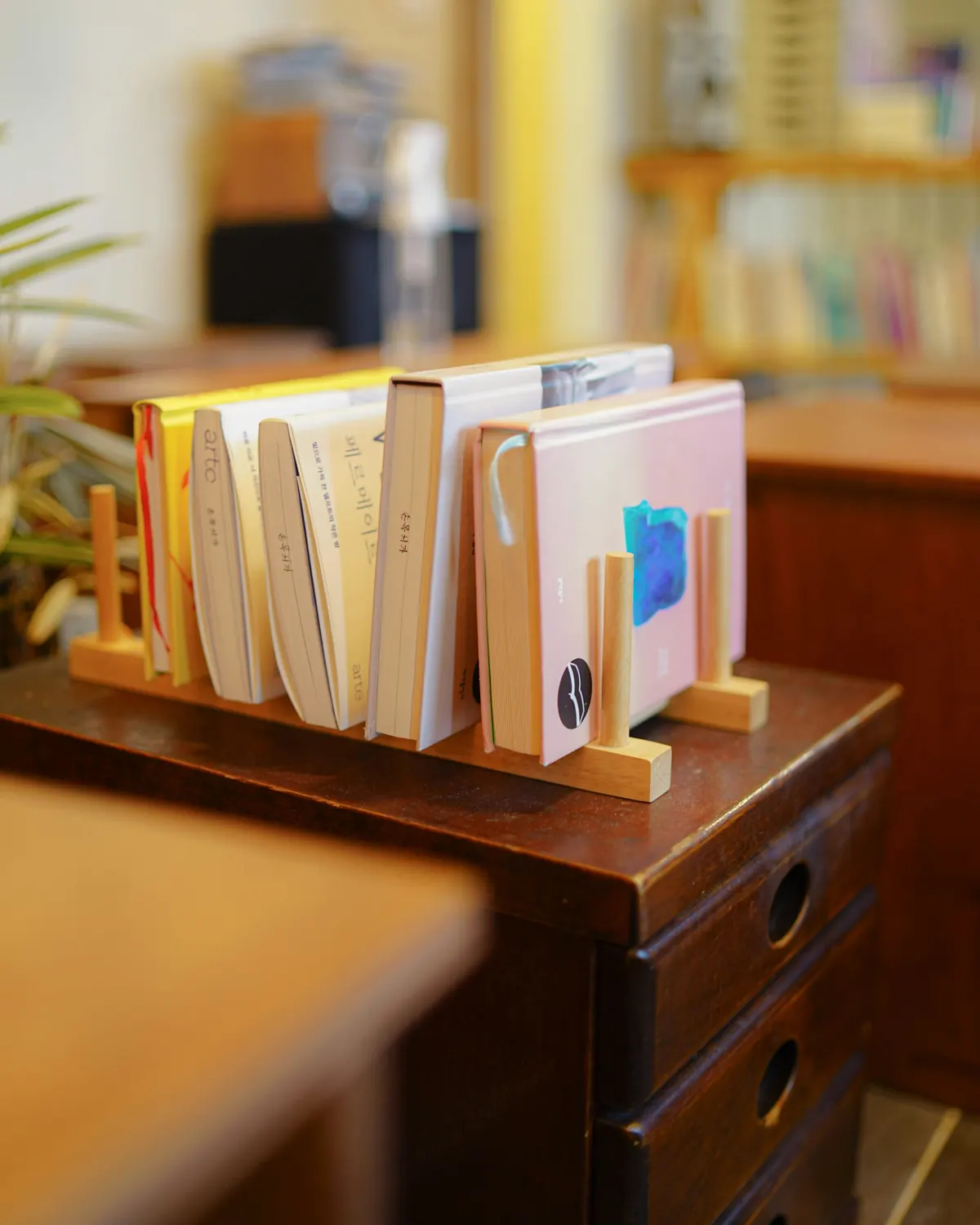
The workspace is modest: a table, a chair, and enough light to read. On the desk, a wooden letter tray now holds notebooks and loose papers.
It's a small detail, but it gives the corner a sense of continuity. Work still happens here. Emails are answered. Cups are forgotten. The desk is cleared, then filled again.
The idea to borrow: Choose vintage pieces that help with real routines. An old object doesn't need to be rare to earn its place; sometimes being useful is its most appealing quality.
07 · The bathroomThe small ceramic tray
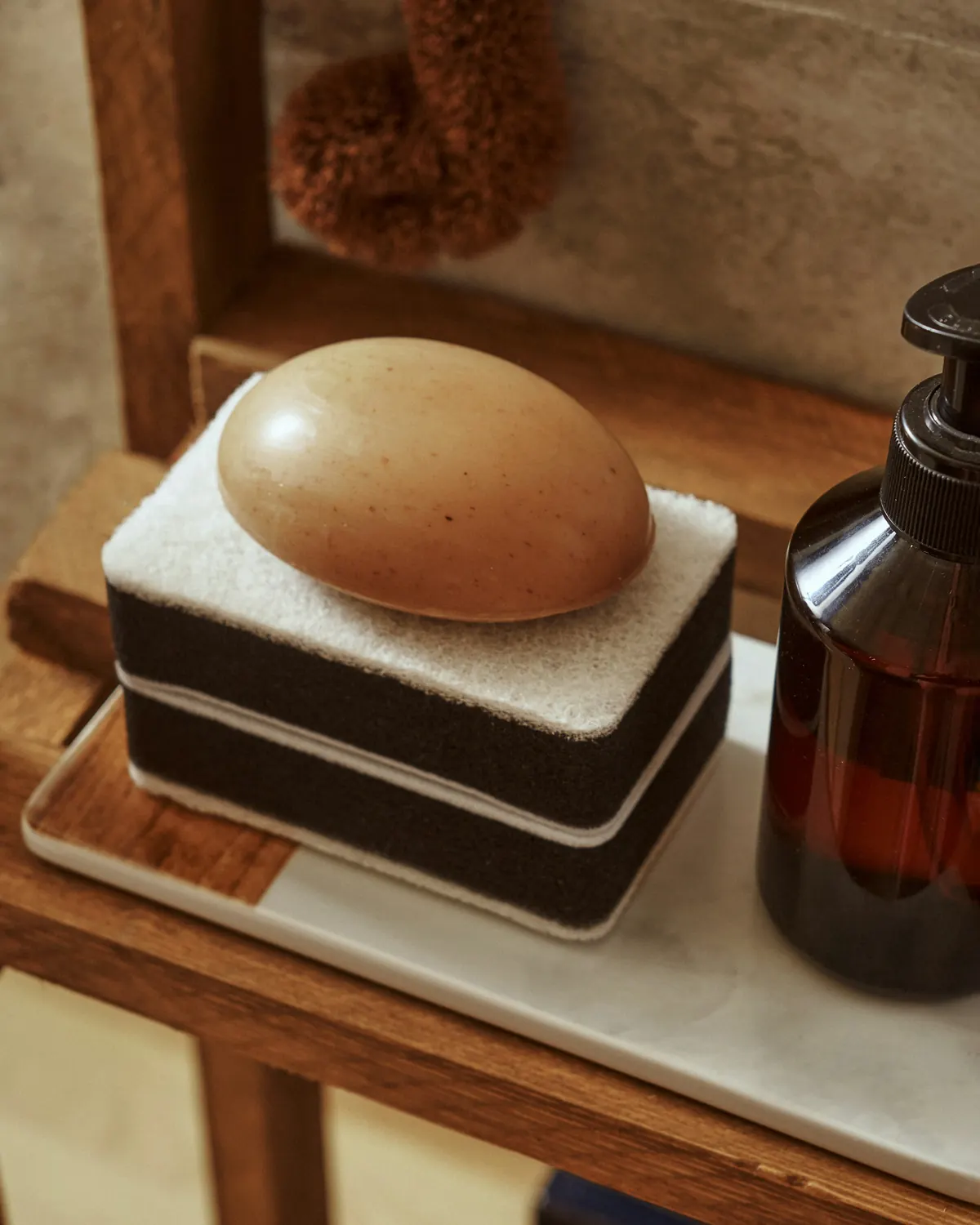
Even the bathroom has room for a little history. A shallow tray sits on a dry shelf, holding a soap and a small container.
Against simple towels and clean surfaces, its shape becomes noticeable. There's no need to turn the room into an antique dressing room.
The idea to borrow: Keep the vintage touch small, practical, and suited to a humid environment. An interesting object has more impact when the surrounding space remains calm.
Does vintage have to look nostalgic?
If you love vintage, your home should look like another decade.
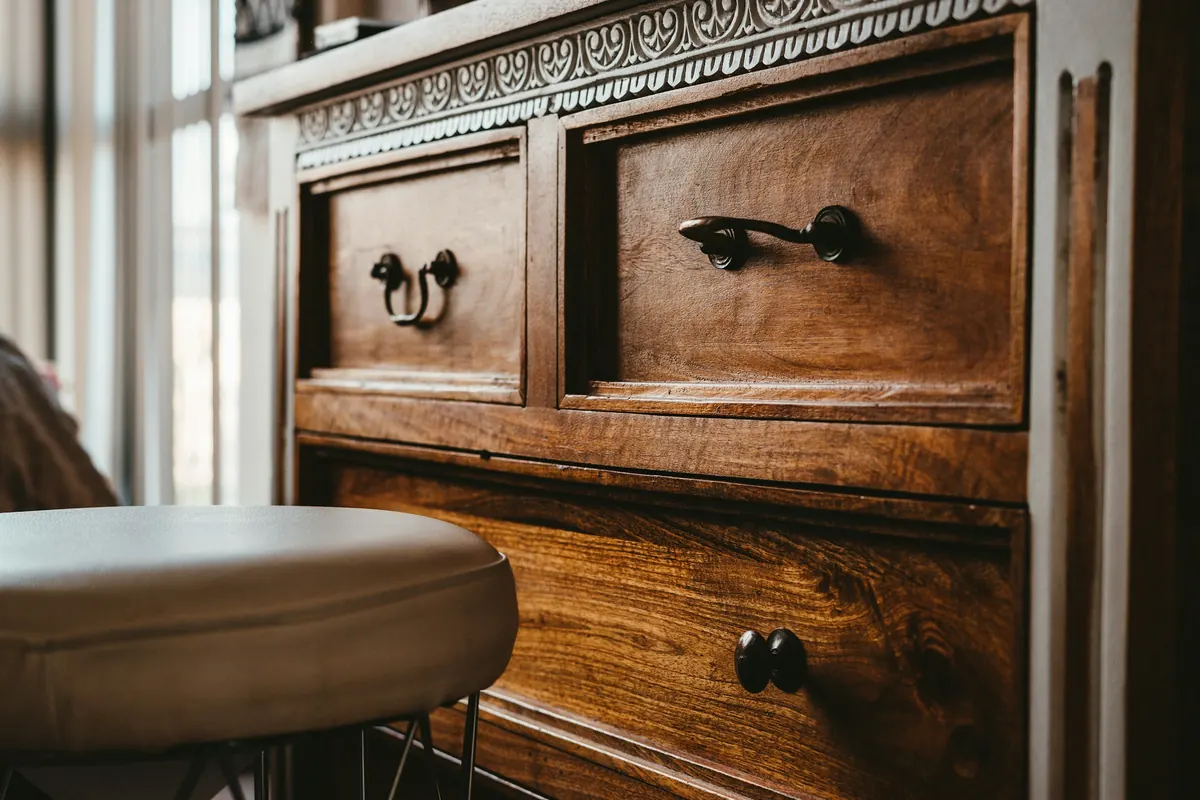
An older object doesn't require an older room. A carved mirror in a minimal entryway, a wooden chair beside a modern table, a patterned textile over crisp bedding: the contrast is often what makes the object interesting.
And there's no requirement to use everything you've inherited or found. Sometimes the most respectful way to live with an old piece is to let it be one object among many, rather than forcing the entire room to imitate its era.
Three questions before you give an old object a place
Would I still like it without its story? A family connection can be meaningful. But if you don't enjoy looking at or using something, you don't have to keep it on display out of obligation.
Does it work with the life I have now? A beautiful chair should be safe to sit on. Storage should be practical. Electrical pieces should be checked by a qualified professional before use if their condition is uncertain.
What would happen if I gave it space? Try one older piece beside contemporary objects, then remove whatever competes with it unnecessarily. Sometimes the best styling decision is subtraction.
A collected home doesn't preserve the past behind glass. It gives the past a place in the present.
The no-shopping vintage edit
- 1Move it.
Choose one object you already own and put it somewhere you can appreciate it.
- 2Pair it.
Set it beside something from a different period or with a simpler shape.
- 3Subtract.
Remove one decorative object that makes the arrangement feel crowded.
- 4Live with it.
Use the space normally for a day. Does the piece make the room more personal, useful, or enjoyable? If not, try another location.
You don't have to keep every meaningful thing visible all the time. A home can hold memories without displaying its entire archive.
Back at the front door
It's evening now. The dining chair has been pulled out. There's a cup on the wooden side table. The old mirror reflects the warm light from the living room.
Nothing has been arranged for a tour. The house is doing what it always does: making space for an ordinary Sunday.
Maybe that's what separates a collected home from a museum. A museum asks us to look at objects. A home invites us to live with them.
That same feeling runs through our story about the Paris apartment, where the most interesting rooms are shaped by the people and objects that belong there.
So keep the old chair, if you love it. Use the pitcher for flowers. Let the mirror have its imperfect frame.
You don't need to recreate another century. You just need to make room for the things that have traveled into yours.
Sources & notes
- 1stDibs, 2026 Interior Design Trends Survey (468 designers): an average of 36% of items sourced per project in 2025 were vintage or antique, the highest since 2021. Not market share or consumer purchases.
- The house and scenes are editorial fiction; the photos come from different homes.
- Photos (Unsplash License): Kate Laine, Julian Hochgesang, Andrej Ermakov, Metin Ozer, Philipp Hubert, Steffen Lemmerzahl, yeonhee, Leonardo Vargas, Marija Zaric, Miah Dailey.
Son las cuatro y veintidós de un domingo.
La puerta de entrada se cierra con ese ruido conocido. Hay un abrigo sobre una silla, un libro a medio leer en la mesa ratona y una franja de sol que cruza el piso.
En la pared cuelga un espejo antiguo con un marco de madera algo gastado. No es especialmente elegante. El vidrio tiene algunas marcas y una de las esquinas fue reparada.
Nadie confundiría este departamento con un museo. Y ahí está parte de su encanto.
Hay algo especial en las casas donde conviven objetos de distintas épocas sin competir por nuestra atención. Una silla antigua junto a una mesa contemporánea. Una jarra de cerámica con flores. Un cuadro que sobrevivió a varias mudanzas.
Las cosas no necesariamente combinan. Pero tienen sentido.
El secreto no es conseguir que toda la casa parezca antigua. Es encontrarles un lugar a los objetos con historia dentro de la vida que tenemos hoy.
Por qué volvemos a mirar lo vintage
Los muebles y objetos antiguos volvieron a ganar protagonismo en el mundo del diseño.
Quizás parte del atractivo esté en que un objeto de otra época puede aportar algo que a veces falta en una casa donde todo combina demasiado: diferencia. Otra textura. Una forma poco habitual. Una superficie que muestra marcas de uso o pequeñas reparaciones.
Aunque tener historia no alcanza. Lo importante es cómo ese objeto convive con todo lo que sucede alrededor.
Imaginemos una visita a una casa donde nada llegó al mismo tiempo. Algunas cosas fueron heredadas. Otras aparecieron en mercados de segunda mano. Hay piezas que cambiaron de habitación varias veces y otras que siguen ahí simplemente porque a sus dueños les gustan. Las mismas ideas funcionan en distintos rincones de un departamento pequeño.
Empecemos por la entrada.
01 · La entradaEl espejo que nos recibe
Sobre una consola sencilla cuelga un espejo antiguo. El marco tiene personalidad, pero lo que sucede debajo es completamente cotidiano: un cuenco para las llaves, un lugar para la correspondencia y un poco de espacio libre.
El espejo no necesita apliques antiguos ni una mesa de la misma época. Necesita un lugar donde tenga sentido.
La idea para tu casa: combiná una pieza vieja expresiva con algo sencillo. Mantené la entrada práctica. Tiene que recibir a quienes viven ahí, no inaugurar una exposición.
02 · El livingLa mesita que ya vivió bastante
Junto al sofá hay una mesa auxiliar de madera con algunos rayones. No pertenece al mismo conjunto que el resto de los muebles.
Pero tiene la altura perfecta para apoyar una taza y un libro. Y alguien la usa todos los días. Eso es lo interesante.
La idea para tu casa: dale una función real a los muebles vintage. Una pieza útil pasa a formar parte de la vida cotidiana, en lugar de convertirse en algo que todos deben evitar tocar.
03 · El comedorLa silla que no combina
Alrededor de la mesa hay varias sillas sencillas y una bastante más antigua. Tiene un respaldo diferente, la madera más oscura y algunas señales de uso.
Pero cuando llegan visitas, nadie pregunta por qué está ahí. Simplemente la acercan a la mesa y se sientan.
La idea para tu casa: una silla distinta puede dar personalidad sin convertir todo el comedor en una mezcla de estilos. Eso sí, asegurate de que sea firme y cómoda. De poco sirve una silla hermosa si da miedo sentarse.
04 · La cocinaLa jarra que encontró otra vida
En una repisa abierta hay una jarra antigua de cerámica. Quizás alguna vez sirvió para llevar agua a la mesa. Ahora tiene unas ramas.
El esmalte presenta pequeñas irregularidades y su forma generosa se destaca entre los platos y vasos de todos los días. No necesita una vitrina.
La idea para tu casa: permití que algunos objetos encuentren funciones nuevas. Una jarra decorativa puede contener flores aunque no sepas si su material es adecuado para servir bebidas.
05 · El dormitorioEl textil que se quedó
A los pies de la cama hay una colcha antigua. El estampado no combina demasiado con las cortinas. Tampoco pertenece a la misma época que las mesas de luz.
Pero suaviza toda la habitación. Hay una belleza especial en las telas que no parecen recién salidas de un paquete.
La idea para tu casa: probá un textil antiguo junto a ropa de cama más simple. Dejá que aporte textura y recuerdos sin exigir que todos los almohadones tengan el mismo dibujo.
06 · El rincón de trabajoEl organizador de madera
El escritorio es sencillo: una mesa, una silla y buena luz. Pero tiene un pequeño organizador de madera que ahora guarda cuadernos y papeles.
No es una pieza espectacular. Simplemente funciona. Ahí se responden mensajes, se toman notas y, de vez en cuando, queda olvidada una taza de café.
La idea para tu casa: elegí objetos vintage que acompañen tus rutinas. No hace falta que una pieza sea rara ni valiosa para merecer un lugar.
07 · El bañoLa bandeja de otra época
Hasta el baño puede guardar una pequeña historia. Sobre una repisa seca hay una bandeja con un jabón y un recipiente pequeño.
Su forma se destaca entre toallas simples y superficies despejadas. No hace falta convertir el baño en un tocador antiguo.
La idea para tu casa: elegí un detalle pequeño, práctico y adecuado para la humedad. Cuando todo alrededor es sencillo, una sola pieza con personalidad puede alcanzar.
¿Una casa vintage tiene que parecer de otra época?
Si te gusta lo vintage, tu casa debería parecer detenida en una década.
Un objeto antiguo no necesita una habitación antigua. Un espejo tallado en una entrada minimalista, una silla de madera junto a una mesa moderna, una colcha antigua sobre una cama de líneas simples: muchas veces, lo interesante es justamente el contraste.
Tampoco estás obligada a mostrar todo lo que heredaste o guardaste. A veces, la mejor manera de apreciar un objeto es permitirle convivir con cosas nuevas, en lugar de organizar toda la casa alrededor de su época.
Tres preguntas antes de darle lugar a un objeto antiguo
¿Me gustaría aunque no conociera su historia? Los recuerdos familiares pueden ser muy importantes. Pero si algo no te gusta ni te resulta útil, no tenés por qué exhibirlo solamente por compromiso.
¿Funciona con la vida que llevo hoy? Una silla tiene que ser segura para sentarse. Un mueble de guardado debe servir para guardar. Y si no conocés el estado de una lámpara antigua, conviene que la revise un profesional antes de usarla.
¿Qué pasaría si le diera un poco de espacio? Probá colocar la pieza junto a objetos contemporáneos y retirar lo que compita innecesariamente. Muchas veces, decorar mejor significa sacar una cosa.
Una casa con historia no conserva el pasado detrás de un vidrio. Le hace lugar en el presente.
Un ejercicio vintage sin salir de compras
- 1Cambialo de lugar.
Elegí algo que ya tengas y ponelo donde puedas disfrutarlo.
- 2Acompañalo.
Sumale algo de otra época o de líneas más simples.
- 3Restá.
Retirá un objeto decorativo para que el conjunto tenga más aire.
- 4Viví con él.
Usá ese rincón normalmente durante un día. ¿Se volvió más personal, más práctico o más agradable? Si no, probá otro lugar.
No es necesario mantener todos los recuerdos a la vista. Una casa puede guardar mucha historia sin exhibir su archivo completo.
Volvemos a la puerta de entrada
Ahora es de noche. La silla del comedor quedó corrida. Hay una taza sobre la mesita de madera. El espejo antiguo refleja la luz cálida que llega desde el living.
Nadie acomodó nada para una visita guiada. La casa está haciendo lo que hace siempre: acompañar un domingo cualquiera.
Quizás ahí esté la diferencia entre una casa con historia y un museo. En un museo, los objetos están para mirarlos. En una casa, también están para vivir con ellos.
Esa misma idea aparece en nuestro artículo sobre el departamento parisino, donde los objetos personales y la manera de habitar los espacios importan más que la perfección.
Así que conservá esa silla, si te gusta. Usá la jarra para poner flores. Dejá que el espejo tenga su marco imperfecto.
No necesitás recrear otro siglo. Solo hacerles lugar a las cosas que llegaron hasta el tuyo.
Fuentes y notas
- 1stDibs, encuesta 2026 Interior Design Trends (468 diseñadores): en 2025, un promedio del 36 % de las piezas por proyecto fueron vintage o antigüedades, el máximo desde 2021. No es participación de mercado ni compras de consumidores.
- La casa y las escenas son ficción editorial; las fotos son de casas distintas.
- Fotos (licencia de Unsplash): Kate Laine, Julian Hochgesang, Andrej Ermakov, Metin Ozer, Philipp Hubert, Steffen Lemmerzahl, yeonhee, Leonardo Vargas, Marija Zaric, Miah Dailey.