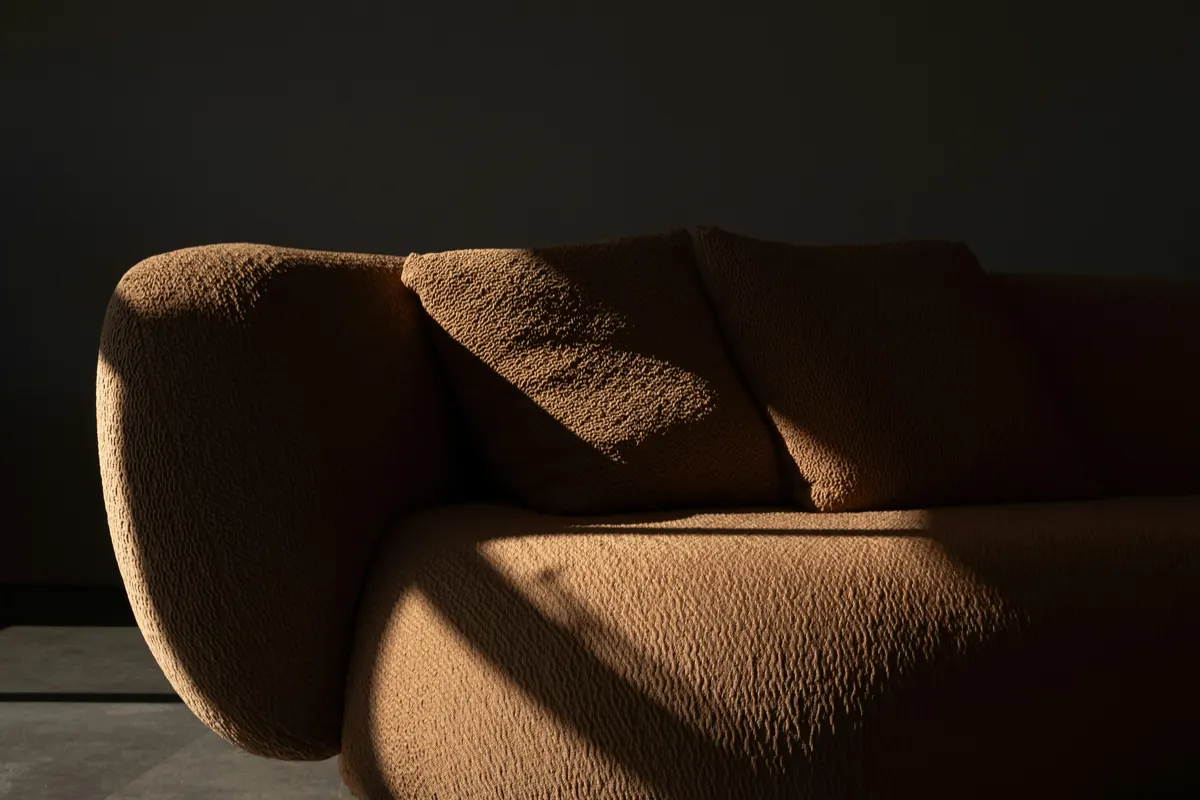
It's 10:24 on a Sunday morning.
The sunlight has reached the living room floor. There's a glass of water on the table, a book beside the sofa, and a chair pushed neatly against the wall.
Everything is in its proper place. Perhaps a little too proper.
The table is rectangular. The rug follows the walls. The cushions stand upright like exceptionally well-behaved guests. Even the little plant in the corner seems to be waiting for instructions.
Nothing is wrong with the room. But nothing quite invites you to stay, either.
You look at a photograph of an interior filled with soft curves, irregular shapes, and natural materials. It feels relaxed, almost effortless. Then you look back at your very rectangular furniture.
Do you really need a new sofa? Probably not.
Why we're looking at curves
Curves are interesting because they interrupt the predictable rhythm of straight lines. A round bowl beside a rectangular book. A relaxed fold of fabric across the edge of a sofa. The irregular silhouette of a plant against a plain wall.
These contrasts can make a room feel less composed and more natural. Let's try four transformations without replacing anything.
Scene 01The entryway: from a corridor to a welcome
Before
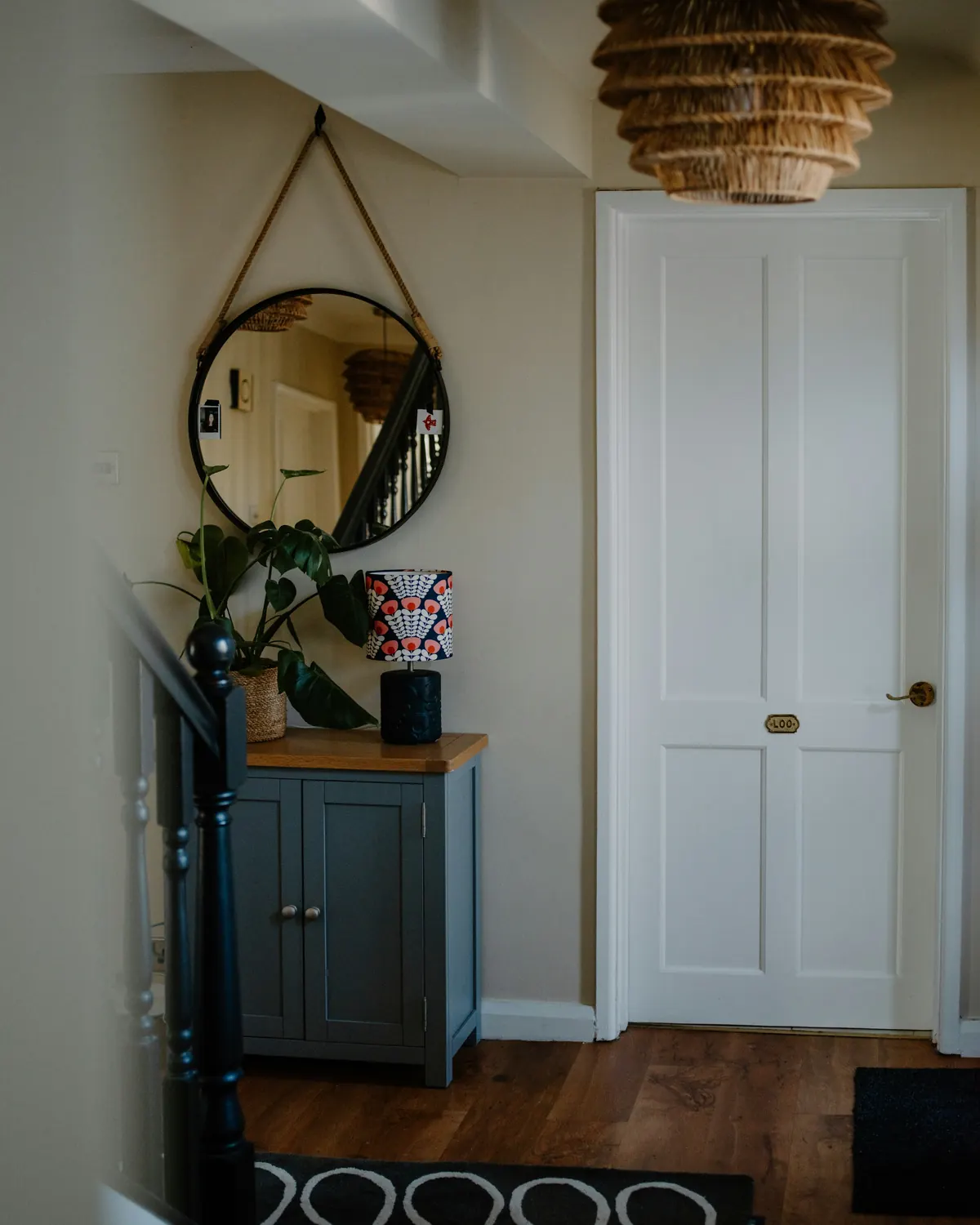
The entryway is narrow. A cabinet stands against the wall, a frame above it, shoes lined up underneath, and a stack of mail on one end. Every element seems to follow the same straight line.
The space works, technically. But the arrangement feels more like a passage than a place.
After
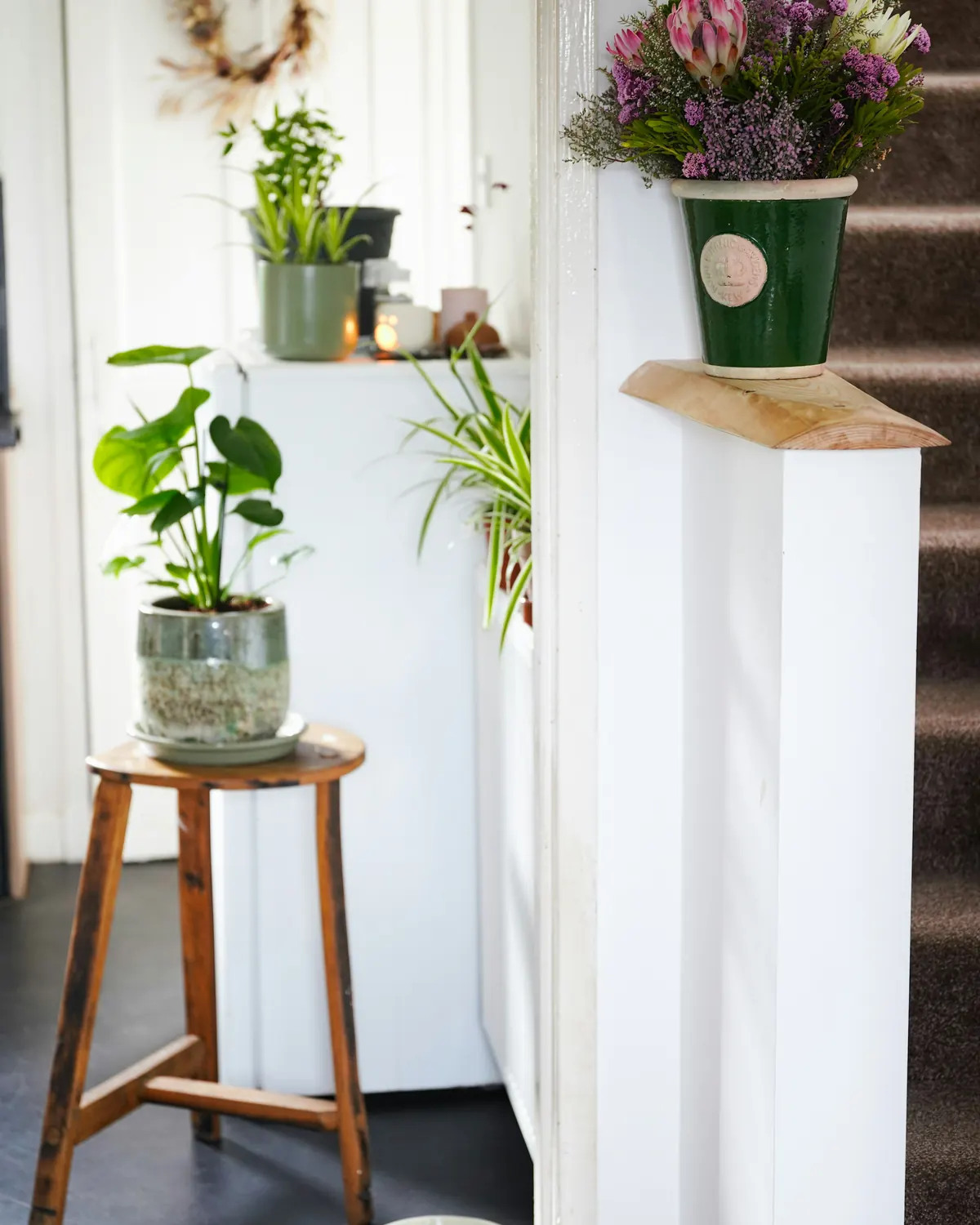
First, clear the mail. Move the small round bowl from the kitchen onto the console: it's now somewhere useful to put your keys.
Next, bring over a plant you already own. Its leaves introduce a softer silhouette beside the square frame. Place it where it receives suitable light and doesn't interfere with the doorway. Leave one end of the surface empty.
The furniture remains exactly the same, but the entryway now has three rhythms: the straight console, the round bowl, and the irregular leaves.
What changed: Not the architecture. The relationship between shapes.
Scene 02The living room: the sofa learns to relax
Before
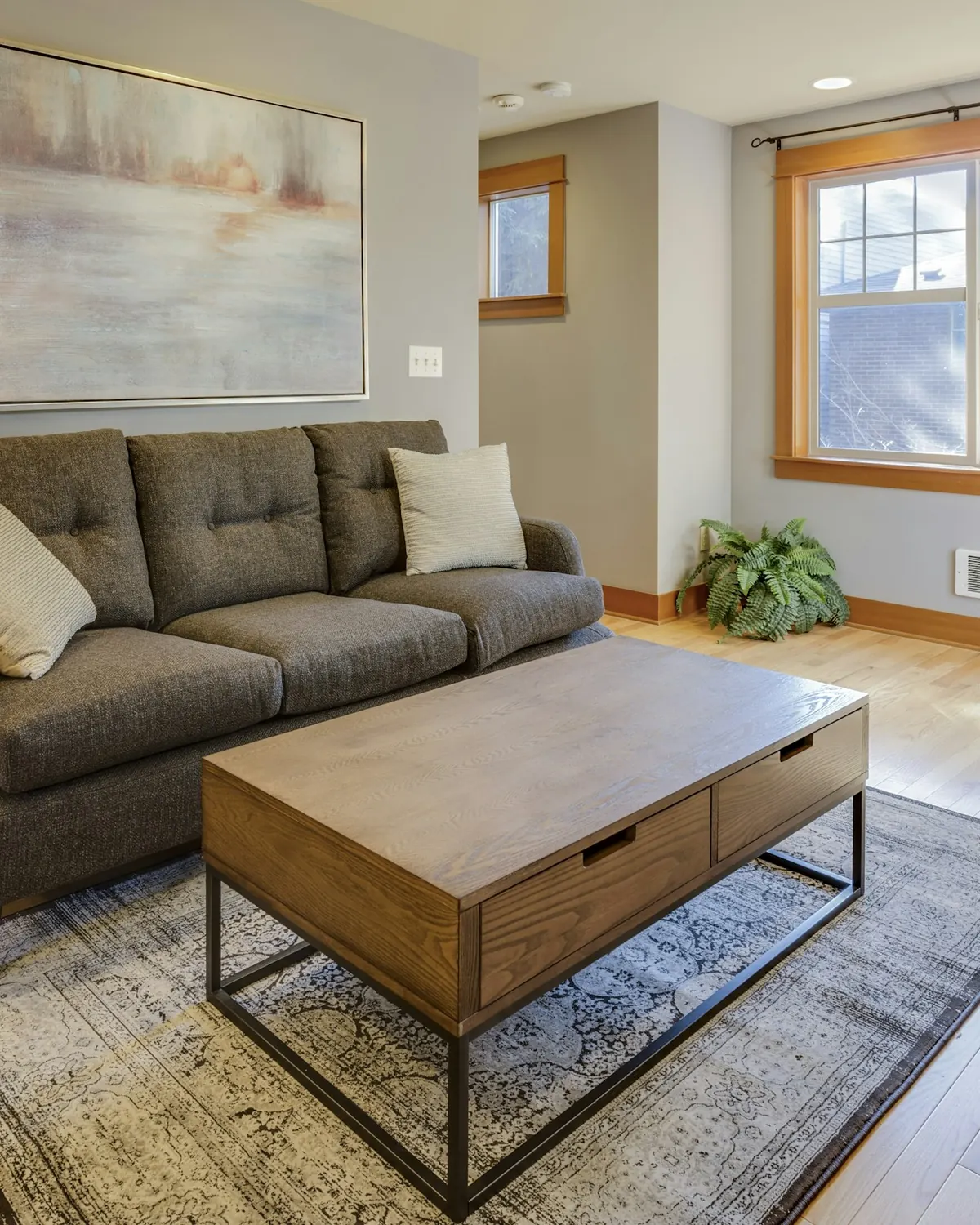
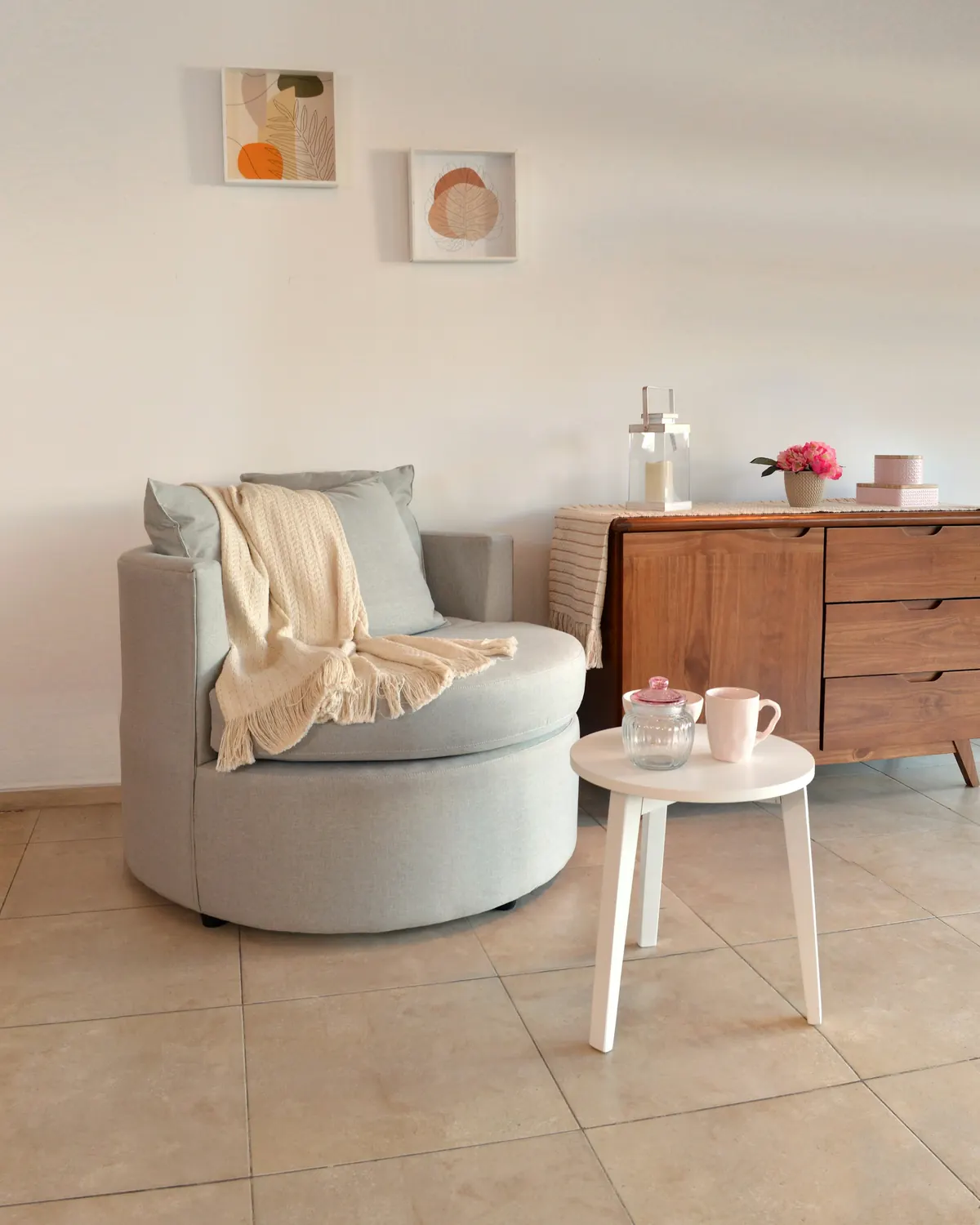
The sofa is rectangular. The coffee table is rectangular. The rug is aligned perfectly with both. Two cushions stand at identical angles.
It's a perfectly respectable arrangement, but it feels as though nobody has been allowed to sit down. The temptation is obvious: buy something round. But hold that thought.
After
Start with the armchair already in the room. Instead of keeping it perfectly parallel to the sofa, turn it slightly toward the coffee table, leaving comfortable walking space.
Take the throw that's usually folded in a rigid rectangle and let it drape naturally over one arm. Angle one cushion rather than arranging both symmetrically. If you have a round tray or ceramic bowl, place it on the coffee table.
The room hasn't acquired a single curved piece of furniture, but the composition feels less rigid because the objects no longer insist on following the same direction.
What changed: The visual rhythm, the textile folds, and the way the seating invites conversation.
Scene 03The dining room: a table that isn't posing
Before
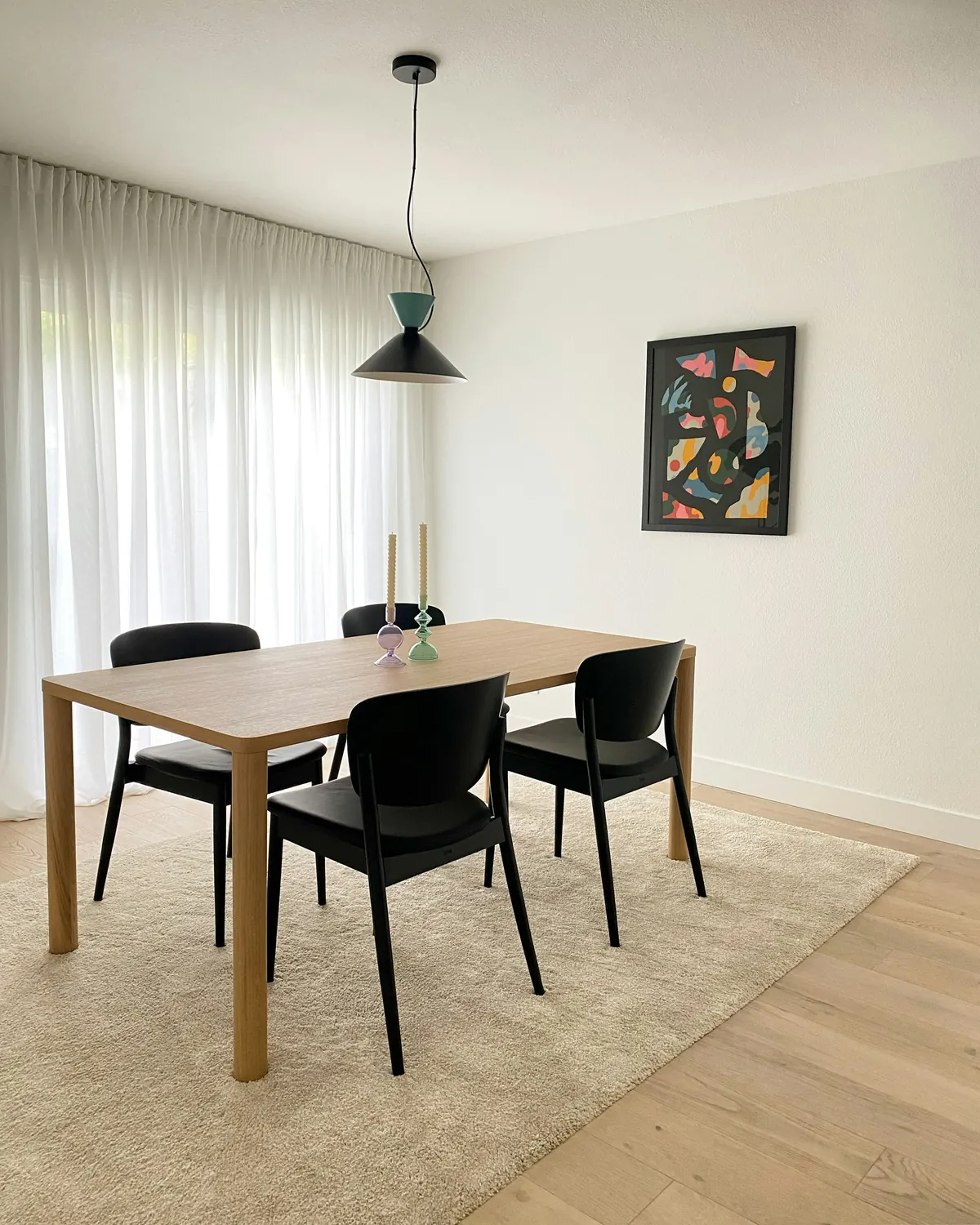
The dining table has chairs placed at identical distances. A runner sits perfectly centered. Everything is balanced. Almost suspiciously balanced.
The room looks ready for a photograph, but dinner seems to require permission.
After
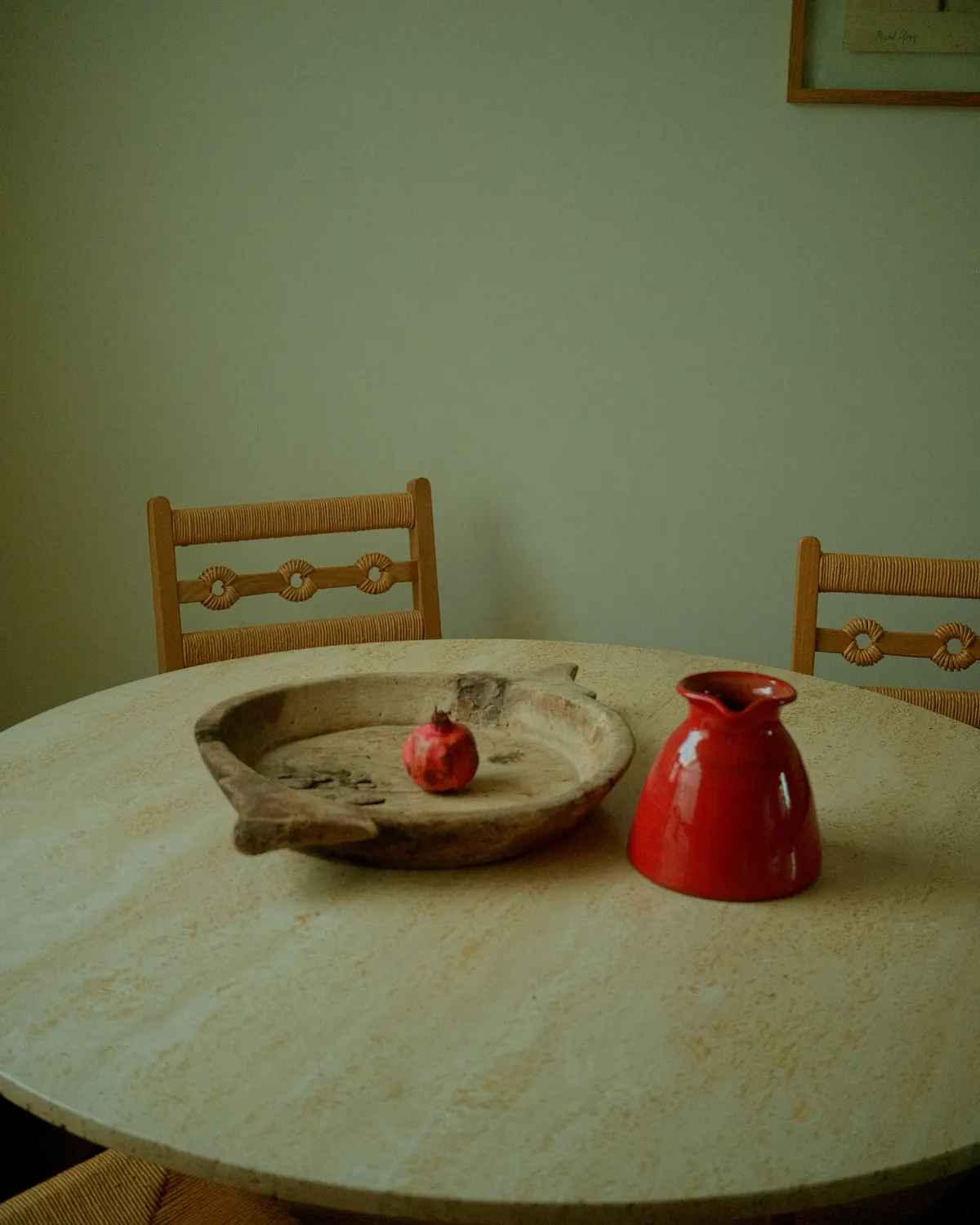
Remove the perfectly arranged centerpiece. Bring in a round bowl from the kitchen and fill it with fruit you already have, or use a ceramic vessel with a few simple branches.
If the tablecloth is meant for everyday use, let it fall naturally over the edges. Move the runner slightly off center or put it away altogether. Keep the chairs where they function best.
The table now combines straight lines with rounded objects, natural textures, and a little asymmetry. And, importantly, there's room for plates.
What changed: The tabletop became more relaxed without losing its purpose.
Scene 04The bedroom: softness without more pillows
Before
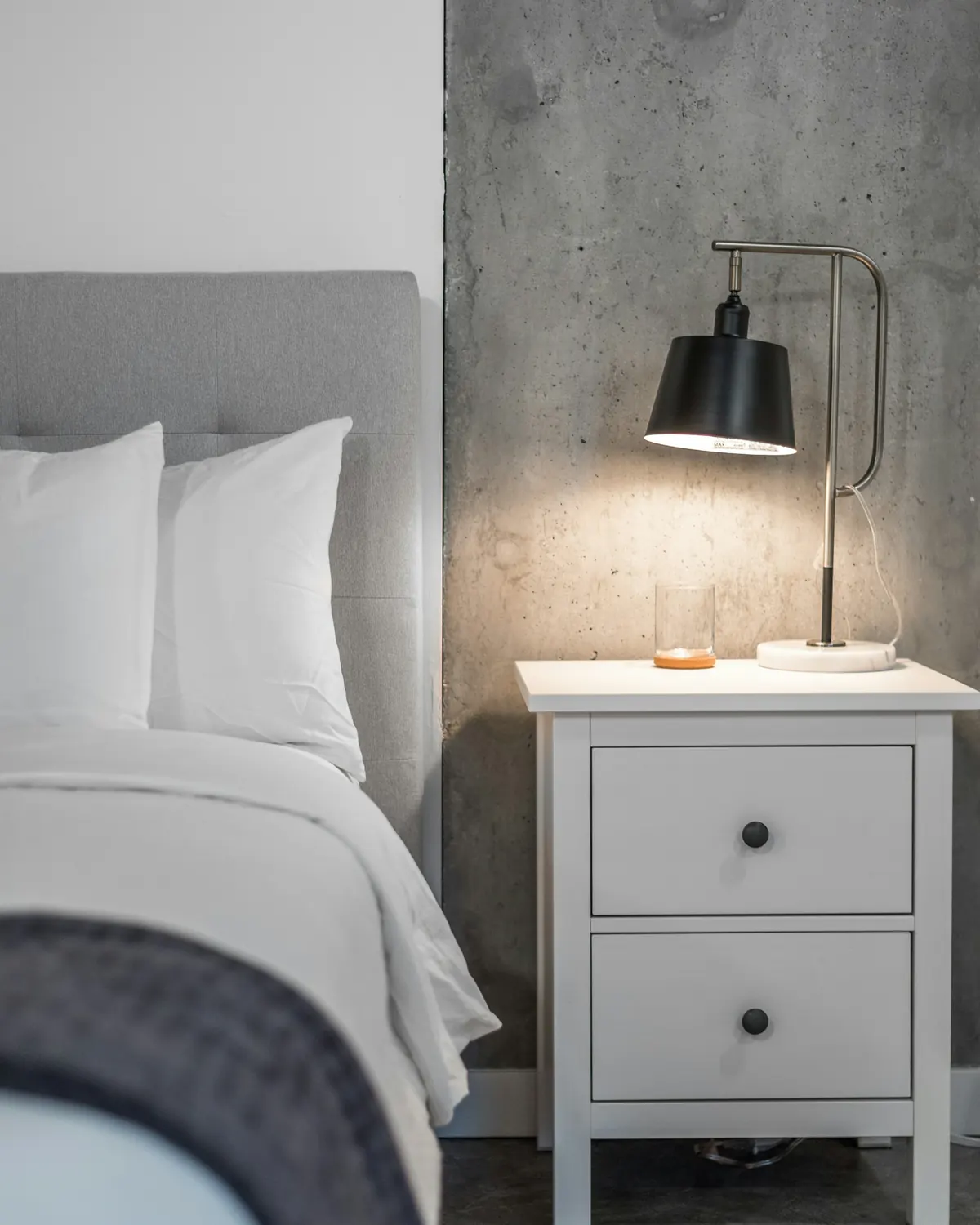
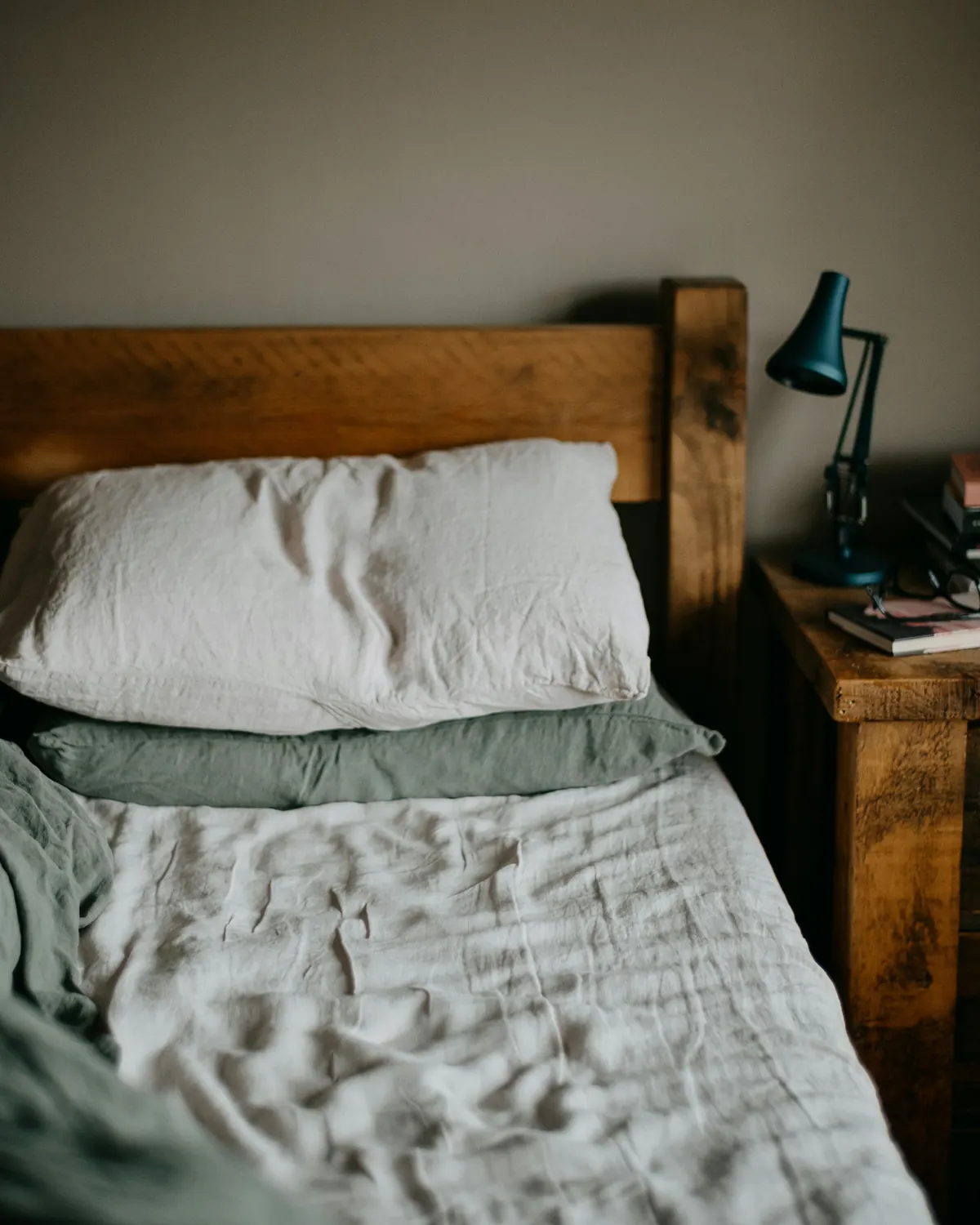
The bed sits beside a square bedside table. The pillows are stacked with admirable precision; the blanket is folded into a flawless strip at the foot of the bed.
It's tidy. But it feels a little like a room waiting for a guest who hasn't arrived.
After
Keep the bed exactly where it is. Release the folded blanket and let it fall more naturally across the mattress. Move one cushion slightly off center. If you have a round ceramic tray, let it gather a book and small objects on the bedside table.
The straight edges of the furniture haven't disappeared. They've simply gained softer companions. Leave clear space around the bed, and keep bedding away from heaters and hot light fixtures.
What changed: The lines are still there. They no longer have to do all the visual work.
What organic modern really asks of us
It's easy to confuse organic modernism with an inventory of products: a curved sofa, an irregular mirror, a sculptural lamp, a pale wooden table.
But an interior doesn't become more personal because every object belongs to the same trend. What matters is the relationship between shapes, materials, and the people who use them.
Straight lines offer clarity, structure, and order. Curves introduce contrast. One doesn't need to defeat the other.
A room doesn't need fewer straight lines. It needs a little freedom from them.
And softness isn't always visual. It's also a chair positioned where people naturally talk, a table with space to eat, or a blanket within reach instead of folded for display.
Try it tonight: the five-object softening exercise
- 1Find the straight lines.
Look at the edges of furniture, frames, shelves, and rugs.
- 2Choose one curve.
Something round or irregular you already own: a bowl, a tray, a plant, a softly shaped vase.
- 3Break one alignment.
If it's safe and practical, angle a chair slightly or move an object off center.
- 4Relax one textile.
Loosen a folded throw, adjust a cushion, or let a tablecloth fall naturally.
- 5Step back, then use the space.
Sit down, walk through it, or have dinner. If it feels awkward, change it again.
No tools. No new furniture. No requirement to become an interior designer before bedtime.
The room, a little later
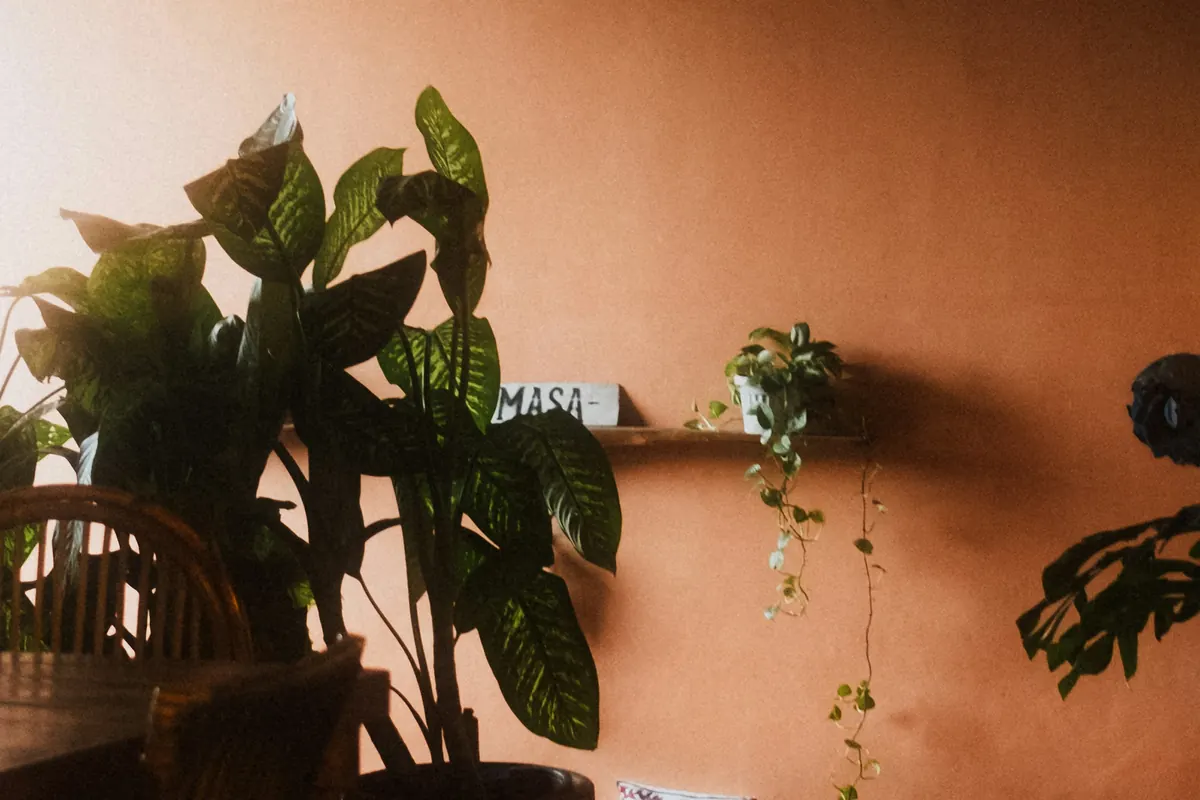
It's 6:18 p.m. The light has softened. The chair in the living room is slightly angled toward the sofa. The blanket has slipped across the armrest. There are dishes on the dining table and a book open beside the bed.
Nothing has become perfectly organic. Thankfully.
The house still has its rectangular tables, square doors, and familiar furniture. But its shapes now feel less like instructions and more like invitations.
Soft curves don't have to replace the straight lines of your home. Sometimes they simply remind us that life doesn't happen in perfect rectangles.
If you enjoy finding new possibilities in familiar interiors, read our story about the Paris apartment and how to live its spirit rather than copy it.
Sources & notes
- 1stDibs, 2026 Interior Design Trends Survey (468 designers, July–August 2025): 43% named curved or irregularly shaped furniture a 2026 trend. Professional expectations, not sales.
- The before-and-after pairs are visual references from different homes, not a documented makeover. The scenes are editorial and hypothetical.
- Photos (Unsplash License): Caroline Badran, Suzanne Rushton, Niklas, phoebe lynch, Francesca Tosolini, Vincent Yap, Annie Spratt, Annie Spratt, Costa Live, ONNO.
Son las diez y veinticuatro de un domingo.
El sol ya llegó al piso del living. Hay un vaso de agua sobre la mesa, un libro junto al sofá y una silla perfectamente acomodada contra la pared.
Todo está en su lugar. Quizás demasiado en su lugar.
La mesa es rectangular. La alfombra sigue exactamente las líneas de las paredes. Los almohadones están parados como invitados que todavía no se animan a sentarse. Hasta la planta del rincón parece estar esperando instrucciones.
No hay nada malo con el ambiente. Pero tampoco tiene demasiadas ganas de invitarte a quedarte.
Entonces ves una foto de un interior con curvas suaves, formas irregulares y materiales naturales. Todo parece relajado, casi espontáneo. Mirás otra vez tus muebles, tan rectangulares.
¿De verdad necesitás cambiar el sofá? Probablemente no.
Por qué volvemos a mirar las curvas
Las curvas tienen algo interesante: interrumpen el ritmo previsible de las líneas rectas. Un cuenco redondo sobre un libro rectangular. Una manta que cae de manera irregular sobre un sofá. Las hojas de una planta frente a una pared lisa.
Esos encuentros pueden hacer que un ambiente se sienta más natural y menos rígido. Vamos a probarlo en cuatro rincones, sin reemplazar nada.
Escena 01La entrada: de pasillo a bienvenida
Antes
La entrada es angosta. Hay un mueble contra la pared, un cuadro arriba, los zapatos alineados debajo y la correspondencia acumulada en un extremo. Todo parece seguir la misma línea recta.
El espacio funciona. Pero se siente más como un lugar de paso que como una bienvenida.
Después
Primero, despejá los papeles. Llevá a la consola ese cuenco redondo que tenés en la cocina: ahora puede servir para guardar las llaves.
Después, acercá una planta que ya tengas. Sus hojas introducen una forma más libre junto al cuadro cuadrado. Ubicala donde reciba la luz apropiada y no moleste al abrir la puerta. Dejá un extremo del mueble vacío.
El mueble sigue siendo el mismo, pero ahora conviven tres ritmos: su línea recta, la forma redonda del cuenco y el contorno irregular de las hojas.
Qué cambió: no fue la arquitectura. Fue la relación entre las formas.
Escena 02El living: un sofá que aprende a relajarse
Antes
El sofá es rectangular. La mesa ratona también. La alfombra está perfectamente alineada con ambos. Dos almohadones descansan en ángulos idénticos.
Todo es bastante correcto. Tan correcto que parece que nadie tuviera permiso para sentarse. La tentación es evidente: comprar algo redondo. Pero antes, probemos otra cosa.
Después
Empezá por el sillón que ya está en el living. En lugar de dejarlo paralelo al sofá, giralo un poquito hacia la mesa ratona, dejando espacio para circular.
Buscá esa manta que siempre está doblada como un rectángulo perfecto y dejala caer naturalmente sobre un apoyabrazos. Acomodá un almohadón en diagonal. Y, si tenés una bandeja redonda o un cuenco de cerámica, apoyalo sobre la mesa.
No apareció ningún mueble curvo, pero el ambiente se siente menos rígido porque los objetos dejaron de obedecer exactamente la misma dirección.
Qué cambió: el ritmo visual, la caída de los textiles y la forma en que los asientos invitan a conversar.
Escena 03El comedor: una mesa que deja de posar
Antes
Las sillas están ubicadas a distancias idénticas. Un camino de mesa perfectamente centrado. Todo está equilibrado. Sospechosamente equilibrado.
Parece una mesa preparada para mirar, pero no necesariamente para sentarse a cenar.
Después
Retirá el centro de mesa tan cuidadosamente acomodado. Traé un frutero redondo de la cocina y llenalo con las frutas que ya tengas, o usá una jarra de cerámica con algunas ramas.
Si usás mantel, dejá que caiga naturalmente por los bordes. Corré el camino de mesa o guardalo por un rato. Las sillas pueden quedarse donde resulten más cómodas.
Ahora hay un diálogo entre las líneas rectas de los muebles, los objetos redondos y las formas naturales. Y, sobre todo, hay espacio para poner los platos.
Qué cambió: la mesa se volvió más relajada sin perder su función.
Escena 04El dormitorio: suavidad sin más almohadones
Antes
La cama está junto a una mesa de luz cuadrada. Las almohadas forman una pila impecable y la manta descansa doblada en una franja perfecta a los pies del colchón.
Todo está ordenado. Pero también parece un dormitorio esperando a un huésped que todavía no llegó.
Después
Dejá la cama donde está. Aflojá la manta y permití que caiga de manera más natural. Mové un almohadón hacia un costado. Si tenés una bandeja redonda, usala sobre la mesa de luz para reunir un libro y algunos objetos pequeños.
Los bordes rectos de los muebles no desaparecieron: simplemente encontraron compañía más suave. Dejá espacio libre alrededor de la cama y mantené los textiles alejados de calefactores y lámparas calientes.
Qué cambió: las líneas siguen ahí, pero ya no tienen que hacer todo el trabajo visual.
Lo que realmente nos propone el organic modern
Es fácil confundir este estilo con una lista de productos: un sofá curvo, un espejo irregular, una lámpara escultórica, una mesa de madera clara.
Pero una casa no se vuelve más personal porque todos sus objetos pertenezcan a la misma tendencia. Lo interesante es la relación entre las formas, los materiales y las personas que viven ahí.
Las líneas rectas aportan claridad, estructura y orden. Las curvas suman contraste. No tienen que competir.
Una habitación no necesita eliminar sus líneas rectas. Necesita un poco de libertad para convivir con otras formas.
Además, la suavidad no es solamente visual. También está en un sillón ubicado donde la conversación surge naturalmente, una mesa donde se puede comer sin mover diez objetos o una manta que está al alcance de la mano.
Probalo esta noche: cinco movimientos para suavizar un rincón
- 1Buscá las líneas rectas.
Observá los bordes de los muebles, los cuadros, las repisas y las alfombras.
- 2Encontrá una curva.
Un cuenco, una bandeja, una planta o un florero de forma irregular que ya tengas.
- 3Rompé una alineación.
Si es seguro y práctico, girá un poco una silla o mové un objeto para que no quede perfectamente centrado.
- 4Relajá un textil.
Aflojá una manta, cambiá un almohadón de posición o dejá que el mantel caiga naturalmente.
- 5Mirá y después usá el espacio.
Sentate, caminá o prepará la mesa. Si algo resulta incómodo, volvé a moverlo.
Sin herramientas, sin muebles nuevos y sin necesidad de convertirte en decoradora antes de acostarte.
La casa, un rato después
Son las seis y dieciocho de la tarde. La luz se volvió más suave. El sillón quedó ligeramente girado hacia el sofá. La manta se deslizó sobre un apoyabrazos. Hay platos en la mesa y un libro abierto junto a la cama.
Nada se volvió perfectamente orgánico. Por suerte.
La casa sigue teniendo mesas rectangulares, puertas cuadradas y esos muebles que conocemos de memoria. Pero las formas ya no parecen instrucciones rígidas. Ahora se sienten más como invitaciones.
Las curvas suaves no necesitan reemplazar las líneas rectas de nuestra casa. A veces, simplemente nos recuerdan que la vida no sucede dentro de rectángulos perfectos.
Si te gusta descubrir nuevas posibilidades en espacios conocidos, podés leer nuestro artículo sobre el departamento parisino y cómo vivir su espíritu sin copiarlo.
Fuentes y notas
- 1stDibs, encuesta 2026 Interior Design Trends (468 diseñadores, julio–agosto de 2025): el 43 % señaló los muebles curvos o irregulares como tendencia de 2026. Expectativas profesionales, no ventas.
- Los pares de antes y después son referencias visuales de casas distintas, no el registro de una transformación real. Las escenas son editoriales e hipotéticas.
- Fotos (licencia de Unsplash): Caroline Badran, Suzanne Rushton, Niklas, phoebe lynch, Francesca Tosolini, Vincent Yap, Annie Spratt, Annie Spratt, Costa Live, ONNO.