It's 4:37 on a Sunday afternoon.
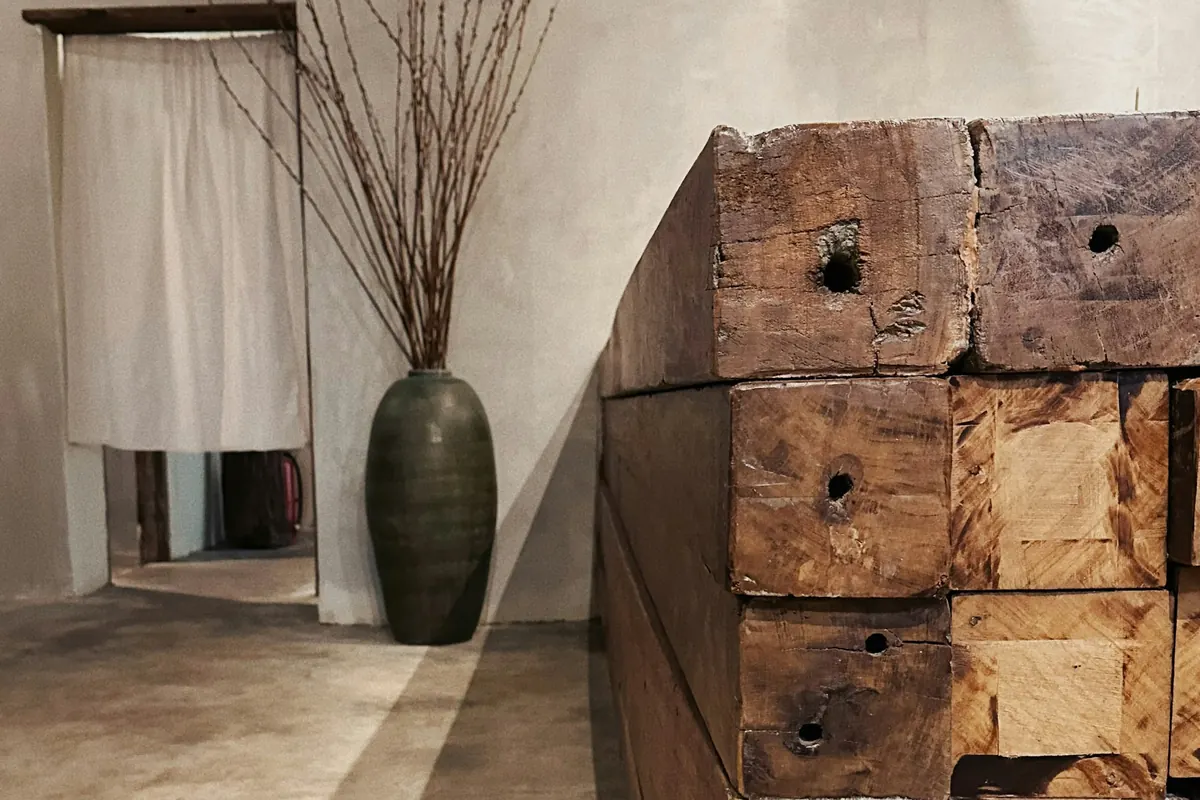
The light is beginning to soften, and a wooden chest stands quietly against a textured wall. Beside it, a ceramic vessel holds a few dry branches. The wood has small marks, the vessel isn't perfectly symmetrical, and the wall isn't entirely smooth.
Nothing looks particularly new. Yet there's something about the room that makes you want to stay.
Perhaps it's the feeling that nobody has tried to erase every sign of time. The objects seem comfortable being exactly what they are, without pretending to be more expensive, more impressive or more perfect. That feeling brings us to wabi-sabi.
What is wabi-sabi, really?
Wabi-sabi is a Japanese aesthetic sensibility associated with simplicity, imperfection and the passage of time. It's a way of appreciating qualities that are easy to overlook: an irregular shape, a surface that has changed with use, the quiet presence of an ordinary object.
But it deserves a little care when we bring it into interior design. Wabi-sabi isn't a decorating formula made of rough walls, wooden furniture and beige fabrics. Nor is it a reason to leave things unfinished or neglected.
It invites us to reconsider what we find beautiful. A handmade bowl doesn't need to be perfectly round. A wooden chair can keep its character even when the finish has softened. A room can be welcoming without looking as though it was assembled in a single afternoon. And a home doesn't need to erase its past every time our tastes change.
Wabi-sabi, Japandi and minimalism: what's the difference?
These three ideas often appear together, but they don't mean the same thing.
Wabi-sabi is a way of appreciating impermanence, simplicity and the character of things that aren't flawless.
Japandi is a contemporary interior label that blends Japanese and Scandinavian influences. Rooms described this way usually favor restrained forms, functional furniture, natural materials and a coordinated atmosphere.
Minimalism, in its broad decorating sense, is about reducing visual and material excess: editing what we keep and letting fewer things occupy a space.
The lines aren't absolute. A minimalist room can hold handmade objects, a Japandi interior can love irregular textures, and a wabi-sabi home can be very well organized. The difference is what draws your attention. Minimalism asks whether something needs to be there. Japandi asks how the pieces work together. Wabi-sabi asks another question: can you appreciate an object without asking it to become perfect?
The things that already belong
Imagine opening a kitchen cabinet. There's a bowl whose shape is slightly irregular. Maybe it was handmade, or maybe it's simply the one that has accompanied your meals for years. You reach for it because you like using it.
That preference matters more than whether the bowl fits a decorating style. The same goes for the wooden chair with a worn finish, the book whose cover has softened, or the vase that never holds flowers in a perfectly balanced way.
You don't have to replace these things with objects designed to look imperfect. You can begin by appreciating them.
Five ways to bring the feeling home
Let one object stand alone
Choose a vase or ceramic vessel with a shape you enjoy. Give it some space on a shelf or table instead of surrounding it with decorations. Let its character be enough.
Keep the chair with a story
A wooden chair with a worn but sound finish brings personality to a room. Put it where you really use it, and look after it so it stays pleasant and safe.
Make the ordinary visible
Bring a favorite everyday bowl out of the cabinet and give it a place on the table. Keep using it for what it's for.
Leave room for the unfinished
A book beside your favorite seat doesn't need a perfectly styled stack around it. Let the corner show that someone actually reads there.
Notice the changing light
Watch how a lamp you already have changes the look of wood, fabric and ceramics in the evening. Familiar surfaces become more interesting when you pay attention.
The difference between imperfection and neglect
A table with marks from years of use can be beautiful. A table with a wobbly leg that could give way needs repair. A bowl with an irregular handmade shape may deserve a special place; a chipped one with sharp edges shouldn't be used carelessly.
The point isn't to romanticize unsafe things. It's to recognize that age and irregularity aren't automatically defects to hide. Care and imperfection can coexist. In fact, looking after an object is often what lets you keep enjoying it.
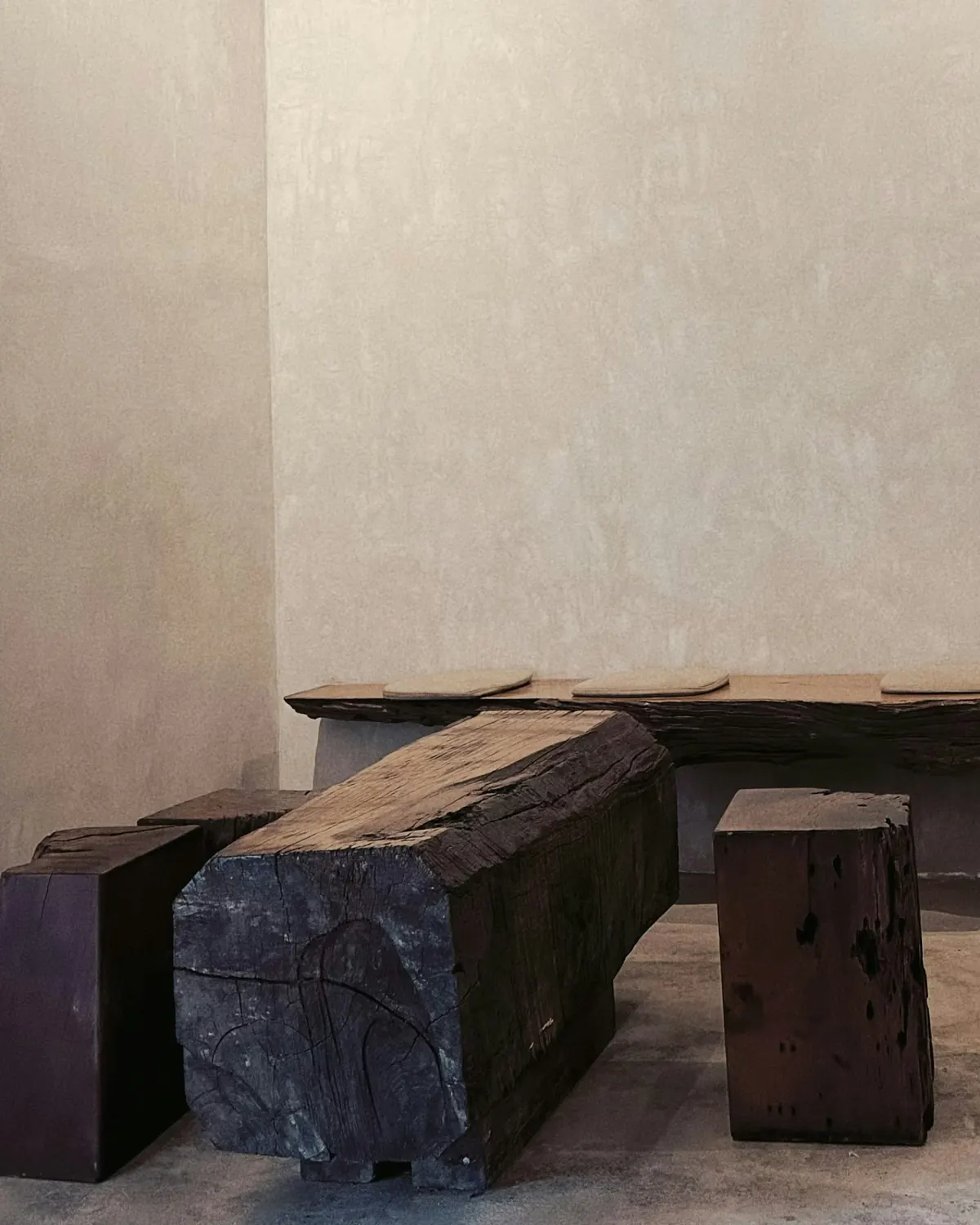
Look at a group of aged wooden benches. Their surfaces are different, their shapes have character, and the wood shows signs of use. You can appreciate their presence without knowing where they came from or inventing a story about who used them. Sometimes an object's visible qualities are enough. Not every piece needs a romantic biography.
Which kind of wabi-sabi are you?
Choose the answer closest to your instincts. There are no right answers, and you may recognize yourself in more than one profile.
Your result is an invitation to experiment, not a rule about how your home should look.
A room that doesn't need to prove anything
It's evening now. The wooden chest is still against the wall. The vessel remains where it was, and the branches cast a different shadow as the light changes. Perhaps you've moved a book or cleared a small part of the table. Nothing dramatic has happened. And that may be exactly the point.
You don't have to love every scratch or keep every broken thing. You can repair what needs repairing, let go of what no longer serves you, and keep the pieces that make everyday life more meaningful.
If you enjoy simple furniture, natural materials and softer forms, see how organic modern curves can change a familiar room.
Because a beautiful home isn't necessarily the one that looks most complete. Sometimes it's the one that lets life leave a few traces.
Sources & notes
- Original editorial piece by ORIGIN. House Studio, with no external sources. Wabi-sabi is introduced briefly as a Japanese aesthetic sensibility; this is not a full account of its philosophy or history.
- The comparison with Japandi and minimalism is illustrative, not a set of rigid definitions. The quiz is a playful exercise, not a psychological assessment.
- Photos (Unsplash License): AllysherLow, AllysherLow.
Son las cuatro y treinta y siete de una tarde de domingo.
La luz empieza a suavizarse y una cómoda de madera descansa contra una pared de textura irregular. A su lado, una vasija de cerámica sostiene algunas ramas secas. La madera tiene pequeñas marcas, la vasija no es perfectamente simétrica y la pared no es del todo lisa.
Nada parece especialmente nuevo. Sin embargo, hay algo en esa habitación que invita a quedarse.
Quizá sea la sensación de que nadie intentó borrar todas las señales del tiempo. Los objetos parecen cómodos siendo lo que son, sin pretender ser más caros, más impresionantes o más perfectos. Esa sensación nos lleva al wabi-sabi.
¿Qué es realmente el wabi-sabi?
El wabi-sabi es una sensibilidad estética japonesa relacionada con la sencillez, la imperfección y el paso del tiempo. Es una manera de apreciar cualidades que suelen pasar inadvertidas: una forma irregular, una superficie que cambió con el uso, la presencia tranquila de un objeto cotidiano.
Pero conviene tratarlo con cuidado cuando hablamos de decoración. El wabi-sabi no es una fórmula de paredes rugosas, muebles de madera y telas beige. Tampoco es una excusa para dejar las cosas sin terminar o descuidadas.
Es una invitación a repensar lo que nos parece bonito. Un cuenco artesanal no necesita ser perfectamente redondo. Una silla de madera conserva su carácter aunque su acabado se haya suavizado. Una habitación puede ser acogedora sin parecer decorada en una sola tarde. Y una casa no necesita borrar su pasado cada vez que cambian nuestros gustos.
Wabi-sabi, Japandi y minimalismo: ¿en qué se diferencian?
Estas tres ideas suelen aparecer juntas, pero no significan lo mismo.
Wabi-sabi es una manera de apreciar lo pasajero, lo sencillo y el carácter de las cosas que no son impecables.
Japandi es una etiqueta contemporánea de interiorismo que mezcla influencias japonesas y escandinavas. Los espacios descritos así suelen preferir formas contenidas, muebles funcionales, materiales naturales y una atmósfera coordinada.
Minimalismo, en su sentido decorativo amplio, busca reducir el exceso visual y material: elegir qué conservamos y dejar que menos cosas ocupen el espacio.
Los límites no son absolutos. Una habitación minimalista puede tener objetos artesanales, un interior Japandi puede valorar las texturas irregulares y una casa wabi-sabi puede estar muy bien organizada. La diferencia está en lo que llama tu atención. El minimalismo pregunta si algo necesita estar ahí. Japandi pregunta cómo funcionan las piezas juntas. El wabi-sabi hace otra pregunta: ¿puedes apreciar un objeto sin pedirle que sea perfecto?
Las cosas que ya son parte de tu casa
Imagina que abres un gabinete de la cocina. Hay un cuenco de forma un poco irregular. Quizá sea artesanal, o quizá sea simplemente el que te acompaña en las comidas desde hace años. Lo eliges porque te gusta usarlo.
Esa preferencia importa más que si el cuenco encaja en un estilo. Lo mismo pasa con la silla de madera de acabado gastado, el libro cuya tapa se suavizó o el florero donde las flores nunca quedan perfectamente equilibradas.
No necesitas reemplazar esas cosas por objetos fabricados para parecer imperfectos. Puedes empezar por apreciarlas.
Cinco maneras de llevar esa sensibilidad a casa
Deja que un objeto esté solo
Elige un florero o una vasija de cerámica cuya forma te guste. Dale espacio en una repisa o una mesa en lugar de rodearlo de adornos. Deja que su carácter sea suficiente.
Conserva la silla con historia
Una silla de madera con un acabado gastado, pero firme, le da personalidad a una habitación. Ponla donde de verdad la uses y cuídala para que siga siendo agradable y segura.
Haz visible lo cotidiano
Saca del gabinete un cuenco que te guste usar y dale un lugar en la mesa. Sigue usándolo para lo que sirve.
Deja lugar para lo que no está terminado
Un libro junto a tu asiento favorito no necesita una pila perfectamente armada alrededor. Deja que el rincón muestre que alguien lee ahí.
Observa cómo cambia la luz
Mira cómo una lámpara que ya tienes cambia la madera, las telas y la cerámica por la noche. Las superficies conocidas se vuelven más interesantes cuando les prestas atención.
La diferencia entre imperfección y descuido
Una mesa con marcas de años de uso puede ser bonita. Una mesa con una pata floja que podría ceder necesita reparación. Un cuenco artesanal de forma irregular puede merecer un lugar especial; uno despostillado, con bordes cortantes, no debería usarse sin cuidado.
La idea no es romantizar lo inseguro. Es entender que la edad y la irregularidad no son defectos que haya que esconder. El cuidado y la imperfección pueden convivir. De hecho, cuidar un objeto suele ser lo que te permite seguir disfrutándolo.
Mira un grupo de bancos de madera envejecida. Sus superficies son distintas, sus formas tienen carácter y la madera muestra señales de uso. Puedes apreciar su presencia sin saber de dónde vienen ni inventar una historia sobre quién los usó. A veces, las cualidades visibles de un objeto son suficientes. No todas las piezas necesitan una biografía romántica.
¿Qué tipo de wabi-sabi eres?
Elige la respuesta más cercana a tu instinto. No hay respuestas correctas y quizá te reconozcas en más de un perfil.
Tu resultado es una invitación a experimentar, no una regla sobre cómo debe verse tu casa.
Una habitación que no necesita demostrar nada
Ya es de noche. La cómoda de madera sigue contra la pared. La vasija está en su lugar y las ramas proyectan otra sombra mientras cambia la luz. Quizá moviste un libro o despejaste una parte de la mesa. No pasó nada espectacular. Y tal vez ese sea justamente el punto.
No tienes que amar cada rayón ni conservar cada cosa rota. Puedes reparar lo que lo necesita, dejar ir lo que ya no te sirve y quedarte con las piezas que hacen más significativa tu vida diaria.
Si te gustan los muebles sencillos, los materiales naturales y las formas suaves, descubre cómo las curvas orgánicas pueden cambiar una habitación conocida.
Porque una casa bonita no es necesariamente la que parece más terminada. A veces es la que deja que la vida marque algunas huellas.
Fuentes y notas
- Pieza editorial original de ORIGIN. House Studio, sin fuentes externas. El wabi-sabi se presenta brevemente como una sensibilidad estética japonesa; no es una explicación completa de su filosofía ni de su historia.
- La comparación con Japandi y el minimalismo es orientativa, no un conjunto de definiciones rígidas. El quiz es un juego, no una evaluación psicológica.
- Fotos (licencia de Unsplash): AllysherLow, AllysherLow.