It's 7:12 on a Thursday evening.
The bathroom mirror is still slightly fogged from the shower. There's a towel hanging over the door, a hairbrush beside the sink and a collection of everyday objects scattered across the counter. Nothing is particularly wrong with the room, but it doesn't feel like somewhere you want to spend an extra minute.
You wash your hands, switch off the light and leave.
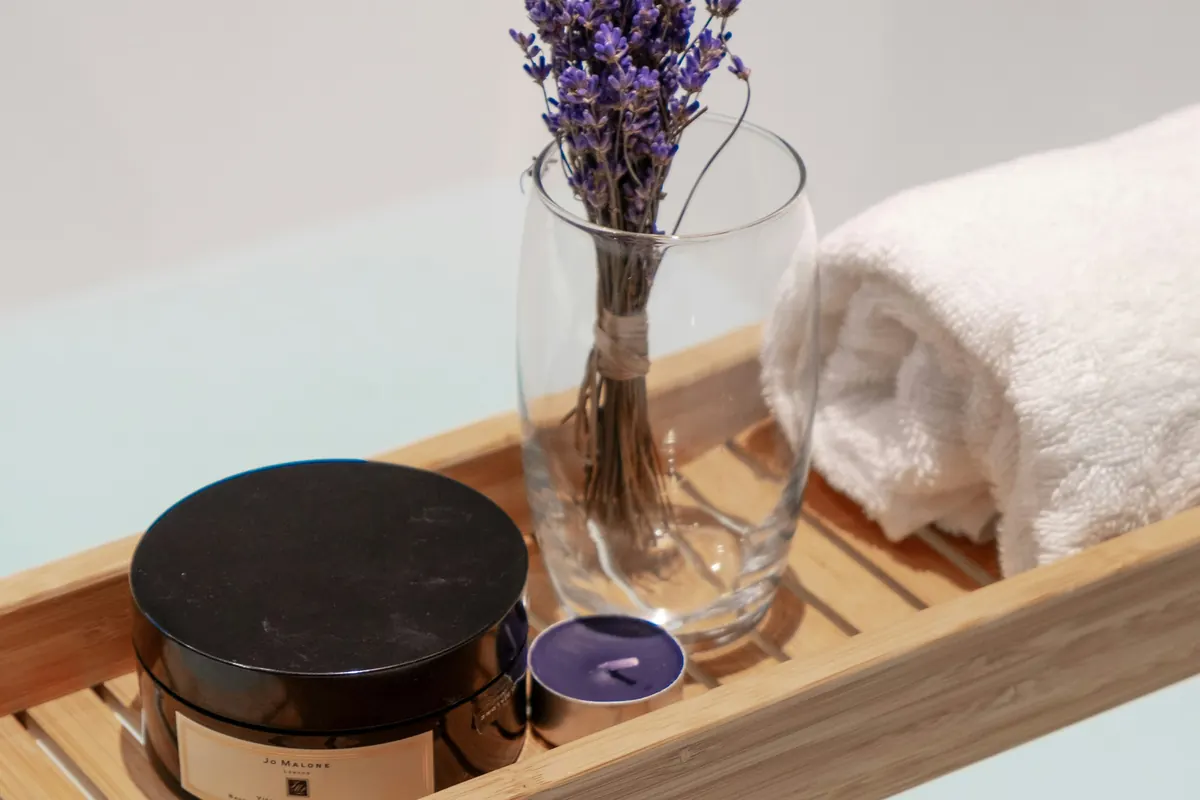
Later, you come across a photograph of a beautiful spa bathroom. Everything looks quiet: a wooden tray, a folded towel, soft light and a little greenery. You look at your own bathroom again. It's smaller. The bathtub is ordinary, the tiles aren't remarkable, and there's no space for an elegant chair.
But perhaps that isn't the point. Maybe the feeling you liked in the photograph had less to do with the architecture and more to do with what wasn't there: the crowded counter, the harsh light, the objects competing for attention.
A spa feeling, without the spa renovation
When we imagine a spa-inspired bathroom, we often picture large rooms, stone surfaces and bathtubs beneath enormous windows. Those spaces can be inspiring, but they aren't a useful starting point for someone with an ordinary bathroom and no plans to renovate.
So let's focus on the experience. What do you notice when you walk in? Is there a convenient place for your towel? Can you find what you need without moving several other things? Does the light feel comfortable at the end of the day?
A bathroom can be small, with simple tiles and a shower curtain that has been there for years, and still feel considered. The difference often begins with how the room is arranged and how you move through it.
Begin with the things you touch every day
Think about your usual morning. You turn on the light, reach for a towel, wash your face and look for the things you need. Now imagine finding the towel exactly where you expect it, a clear counter and enough light to use the mirror comfortably.
You don't need an elaborate decorative arrangement. In fact, too many decorative objects make a small bathroom harder to use. The aim is a room that feels peaceful because it works well, not because nobody is allowed to touch anything. And there's no need to throw away the products you use. They just need a sensible place to live.
Seven steps to a calmer bathroom
- 1Clear the visible surfaces
Start with the sink counter, the edge of the tub and any open shelves. Take everything off, clean, and return only what you use every day. Keep the rest in a drawer, a cabinet or a container you already have. Leave some empty space.
- 2Choose a quiet palette
Look at the colors already in your tiles, walls, towels and furniture. Pick two or three tones to guide what stays visible: cream, warm wood and olive, or white, stone and a muted textile. This is a styling exercise, not a reason to repaint.
- 3Give the towels some attention
If you have matching, thick towels, keep them together. If yours are all different, group similar colors and fold them the same way. Keep a fresh towel within reach and store extras where they won't get damp.
- 4Soften the lighting
If your bathroom already has a dimmer, try a gentler setting when you aren't doing detailed tasks at the mirror. Keep enough light to get ready and move safely. Never put an ordinary portable lamp near water.
- 5Bring in one natural element
A wooden tray, a stone, or a plant that tolerates humidity and gets enough light. Choose something you already own. Keep wood away from standing water and let it dry.
- 6Think about scent and fresh air
A soft, familiar scent is optional; clean towels and an aired room are often enough. Open the window or turn on the fan after a shower, and let wet surfaces and textiles dry. Keep candles away from towels and curtains.
- 7Create a five-minute ritual
Choose a moment when the bathroom is yours. Leave the phone outside, wash your face, take your time drying it and enjoy a few quiet minutes. When you're done, leave the room ready for the next person.
The beauty of doing less
One tempting mistake in a small bathroom is trying to make every corner decorative. A tray by the sink, another by the tub, a basket of towels, several candles, a row of bottles and a plant balanced on the only shelf. Each detail may look lovely. Together, they leave you nowhere to put your toothbrush.
Choose one place for a thoughtful arrangement and let the rest stay practical. Perhaps the wooden tray goes across the tub only when you use it. Perhaps the folded towels deserve a shelf of their own. And maybe the most beautiful object by the sink is simply the one you reach for every morning.
An evening that feels a little different
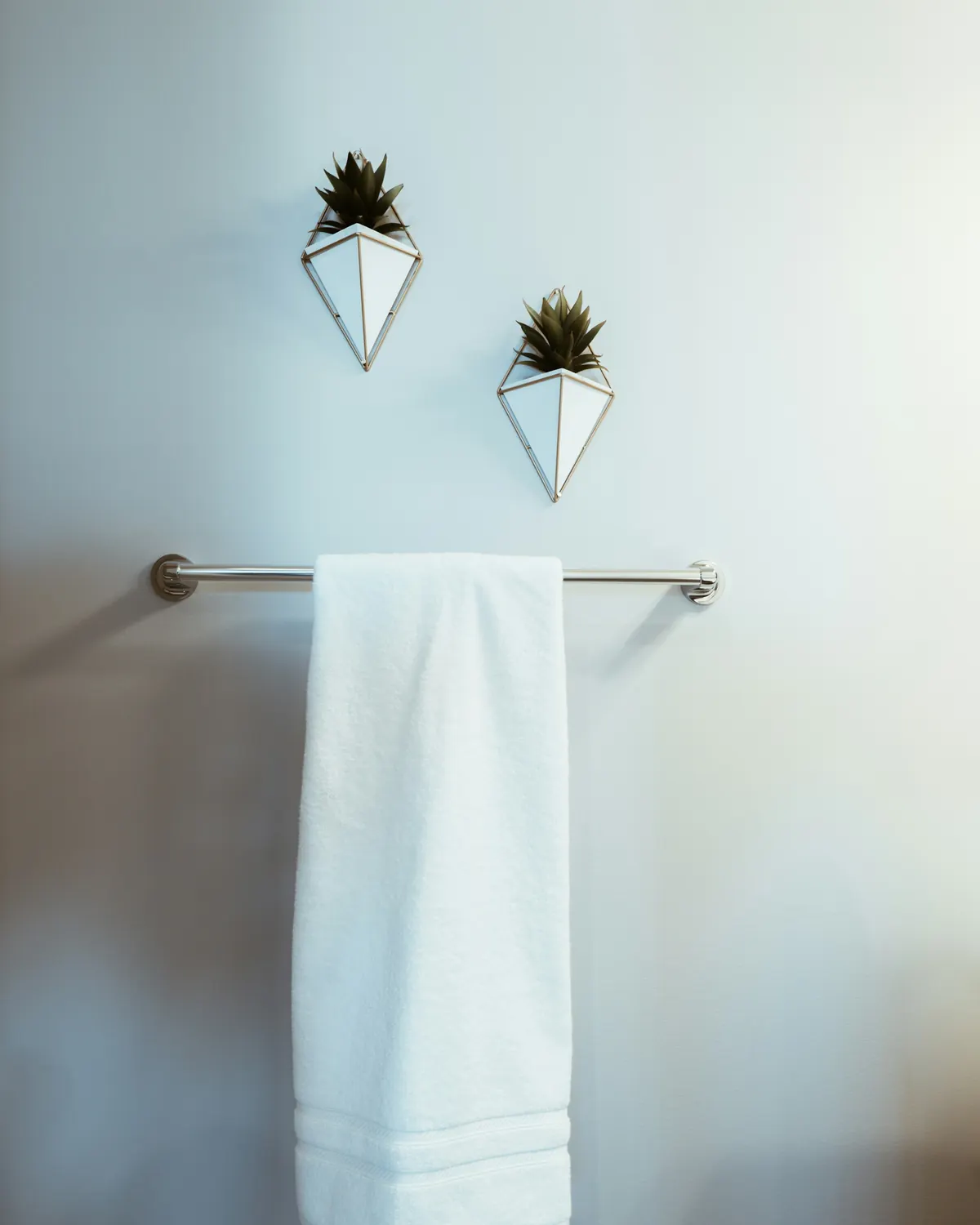
Imagine the bathroom after those small changes. The counter is clear enough to use. The towels are folded, a familiar object sits on a shelf and the light suits what you're doing.
Nothing about the architecture has changed. The tiles are the same. So are the mirror, the tub and the door that opens a little too close to the sink. But the room has a different rhythm. You aren't searching for things or moving decorations out of the way.
A bathroom doesn't need to look luxurious to feel like a place where you can take care of yourself.
If you rent, make the changes reversible
You don't need to replace tiles or make permanent changes to the walls. Start with what can move.
A shower curtain you already own looks different when it's clean and hung neatly. A bath mat can define the area beside the shower. A freestanding towel rack or an over-the-door hook can add a place for towels without drilling.
An adhesive shelf can help with small things, but check the surface, the humidity, the weight it can hold and how it comes off. Not every adhesive works on every tile. If something could damage the wall, look for another solution with the furniture and storage you already have.
The myth of the expensive spa bathroom
A spa-like bathroom needs a renovation, expensive finishes and a large bathtub
The atmosphere of a bathroom also depends on how it's organized, lit and used. Clear surfaces, soft textiles, a restrained palette and a pleasant routine can make a small bathroom feel more welcoming without changing its architecture.
Maybe your version of calm is a clear counter and a towel within reach. Maybe it's the few quiet minutes before bed. Or finally finding a place for everything you've been moving from one side of the sink to the other. Those are meaningful improvements, too.
The five-minute ending
It's 9:18 now. The house is quieter, and you're getting ready for bed. You switch on the light and find the room almost exactly as you left it. The towel is in its place. The sink is clear, and there's nothing to move before washing your face.
You take your time. Not because the room has become extraordinary, but because an ordinary moment has become a little more pleasant.
If you'd like to bring that same feeling into the bedroom, here's how to make a bed look like a hotel bed.
The most beautiful everyday rituals don't require a different home. They begin by giving the one you have a little more attention.
Sources & notes
- Original practical guide by ORIGIN. House Studio, with no external sources, statistics or named products. The seven steps are a styling approach, not an official standard or a health recommendation.
- Any lighting, shelf or fixture in a bathroom must be suitable for damp areas. Leave electrical changes to a qualified professional.
- Photos (Unsplash License): Benjamin Cheng, Lukas Schroeder.
Son las siete y doce de una tarde de jueves.
El espejo del baño sigue un poco empañado después de la ducha. Hay una toalla colgada de la puerta, un cepillo junto al lavabo y varios objetos repartidos por todas partes. No hay nada especialmente malo en el baño, pero tampoco es un lugar donde te den ganas de quedarte un minuto más.
Te lavas las manos, apagas la luz y sales.
Más tarde ves la fotografía de un baño tipo spa. Todo parece tranquilo: una bandeja de madera, una toalla doblada, luz suave y un poco de verde. Vuelves a mirar tu baño. Es más pequeño. La bañera es común, los azulejos no tienen nada especial y no hay lugar para un sillón elegante.
Pero quizá ese no sea el punto. Tal vez lo que te gustó de la foto tenía menos que ver con la arquitectura y más con lo que no estaba: la superficie llena, la luz demasiado fuerte, los objetos compitiendo por atención.
Sensación de spa sin remodelar
Cuando imaginamos un baño tipo spa, solemos pensar en habitaciones amplias, superficies de piedra y bañeras bajo ventanales enormes. Pueden ser muy inspiradores, pero no son un punto de partida útil para alguien con un baño común y sin planes de remodelar.
Por eso, vamos a pensar en la experiencia. ¿Qué notas cuando entras? ¿Tienes un lugar práctico para la toalla? ¿Encuentras lo que necesitas sin mover otras cosas? ¿La luz es agradable al final del día?
Un baño puede ser pequeño, con azulejos sencillos y una cortina de ducha que lleva años en casa, y aun así sentirse cuidado. La diferencia suele empezar por cómo está organizado y cómo te mueves en él.
Empieza por lo que tocas todos los días
Piensa en tu mañana. Enciendes la luz, buscas una toalla, te lavas la cara y alcanzas lo que necesitas. Ahora imagina que la toalla siempre está donde la esperas, que alrededor del lavabo hay espacio libre y que la luz te deja usar el espejo con comodidad.
No hace falta una composición decorativa elaborada. De hecho, demasiados adornos complican un baño pequeño. La idea es un espacio que se sienta tranquilo porque funciona bien, no porque nadie pueda tocar nada. Y no necesitas deshacerte de lo que usas: solo necesita un lugar sensato.
Siete pasos para un baño más tranquilo
- 1Despeja las superficies visibles
Empieza por el lavabo, el borde de la bañera y las repisas abiertas. Retira todo, limpia y devuelve solo lo que usas a diario. Guarda el resto en un cajón, un gabinete o un recipiente que ya tengas. Deja algo de espacio libre.
- 2Elige una paleta tranquila
Mira los colores que ya hay en azulejos, paredes, toallas y muebles. Elige dos o tres tonos para lo que queda a la vista: crema, madera cálida y oliva, o blanco, piedra y una tela apagada. Es un ejercicio de decoración, no un motivo para pintar.
- 3Presta atención a las toallas
Si tienes toallas gruesas e iguales, mantenlas juntas. Si todas son distintas, agrupa colores parecidos y dóblalas igual. Deja una toalla limpia a mano y guarda las demás donde no se humedezcan.
- 4Suaviza la luz
Si tu baño ya tiene regulador de intensidad, prueba una luz más suave cuando no necesites el espejo para tareas de detalle. Conserva luz suficiente para arreglarte y moverte con seguridad. Nunca pongas una lámpara portátil común cerca del agua.
- 5Suma un elemento natural
Una bandeja de madera, una piedra o una planta que tolere la humedad y reciba luz suficiente. Elige algo que ya tengas. Mantén la madera lejos del agua estancada y déjala secar.
- 6Piensa en el aroma y el aire
Un aroma suave y conocido es opcional; las toallas limpias y un baño ventilado suelen bastar. Abre la ventana o enciende el extractor después de ducharte y deja secar superficies y telas húmedas. Mantén las velas lejos de toallas y cortinas.
- 7Crea un ritual de cinco minutos
Elige un momento en que el baño sea solo tuyo. Deja el teléfono afuera, lávate la cara, sécala sin prisa y disfruta unos minutos de calma. Al terminar, deja el baño listo para la siguiente persona.
La belleza de hacer menos
Un error tentador en un baño pequeño es querer decorar cada rincón. Una bandeja junto al lavabo, otra en la bañera, una canasta con toallas, varias velas, una fila de frascos y una planta haciendo equilibrio en la única repisa. Cada detalle puede ser bonito. Juntos, no te dejan dónde apoyar el cepillo de dientes.
Elige un solo lugar para una composición cuidada y deja que el resto sea práctico. Quizá la bandeja de madera vaya sobre la bañera solo cuando la usas. Quizá las toallas dobladas merezcan una repisa propia. Y tal vez el objeto más bonito junto al lavabo sea simplemente el que usas cada mañana.
Una noche que se siente distinta
Imagina el baño después de esos pequeños cambios. Alrededor del lavabo hay espacio para usarlo. Las toallas están dobladas, un objeto querido descansa en una repisa y la luz acompaña lo que haces.
La arquitectura no cambió. Los azulejos son los mismos. También el espejo, la bañera y esa puerta que abre demasiado cerca del lavabo. Pero el baño tiene otro ritmo. Ya no buscas cosas ni mueves adornos para poder usarlo.
Un baño no necesita parecer lujoso para ser un lugar donde cuidarte.
Si alquilas, que los cambios se puedan deshacer
No necesitas cambiar azulejos ni hacer cambios permanentes en las paredes. Empieza por lo que se puede mover.
Una cortina de ducha que ya tienes se ve distinta limpia y bien colgada. Un tapete de baño define la zona junto a la ducha. Un toallero de pie o un gancho para la puerta suman un lugar para las toallas sin perforar.
Una repisa adhesiva puede ayudar con objetos pequeños, pero revisa la superficie, la humedad, el peso que aguanta y cómo se retira. No todos los adhesivos funcionan en todos los azulejos. Si algo puede dañar la pared, busca otra solución con los muebles y el almacenamiento que ya tienes.
El mito del baño tipo spa caro
Un baño tipo spa necesita una remodelación, materiales caros y una bañera grande
La atmósfera de un baño también depende de cómo se organiza, se ilumina y se usa. Superficies despejadas, textiles suaves, una paleta limitada y una rutina agradable pueden hacer que un baño pequeño se sienta más acogedor sin tocar su arquitectura.
Quizá tu versión de la calma sea un lavabo despejado y una toalla a mano. Quizá sean esos minutos tranquilos antes de dormir. O por fin encontrar un lugar para todo lo que llevas meses moviendo de un lado al otro del lavabo. Esos cambios también valen.
Los cinco minutos del final del día
Ahora son las nueve y dieciocho. La casa está más tranquila y te preparas para dormir. Enciendes la luz y encuentras el baño casi exactamente como lo dejaste. La toalla está en su lugar. El lavabo está despejado y no tienes que mover nada para lavarte la cara.
Te tomas tu tiempo. No porque el baño se haya vuelto extraordinario, sino porque un momento cotidiano se volvió un poco más agradable.
Si quieres llevar esa misma sensación al dormitorio, aquí tienes cómo hacer una cama como de hotel.
Los rituales cotidianos más bonitos no necesitan otra casa. Empiezan cuando le prestamos un poco más de atención a la que ya tenemos.
Fuentes y notas
- Guía práctica original de ORIGIN. House Studio, sin fuentes externas, estadísticas ni productos con nombre. Los siete pasos son una propuesta de decoración, no una norma oficial ni una recomendación de salud.
- Cualquier lámpara, repisa o accesorio en el baño debe ser apto para zonas húmedas. Deja los cambios eléctricos a un profesional calificado.
- Fotos (licencia de Unsplash): Benjamin Cheng, Lukas Schroeder.