17:17Christmas Eve
Someone is asking where the extra chairs are. There's a dish in the oven, a stack of napkins on the counter, and one guest who has arrived early enough to be helpful but not quite early enough to know where anything belongs.
The dining table is still empty.
You look at the clock. Then at the table. And for a moment, you wonder why you didn't start preparing everything three days ago.
But here's a thought: the people coming over aren't expecting a perfect photograph. They're coming to spend Christmas with you.
The table doesn't need to look like a formal event. It needs somewhere to put the food, enough room for everyone's elbows, and a few details that make the evening feel special.
And most of those details may already be in your cupboards.
First, forget the perfect Christmas table
We have a habit of imagining festive tables as elaborate productions. Matching plates. Identical glasses. An impressive centerpiece. Napkins folded into complicated shapes that nobody knows how to unfold.
It's beautiful in a photograph. But sometimes rather exhausting in real life.
A well-loved tablecloth can be more welcoming than an immaculate new one. A mixture of dishes can have more personality than a perfectly coordinated set. And a simple bowl of fruit might be all the centerpiece you need.
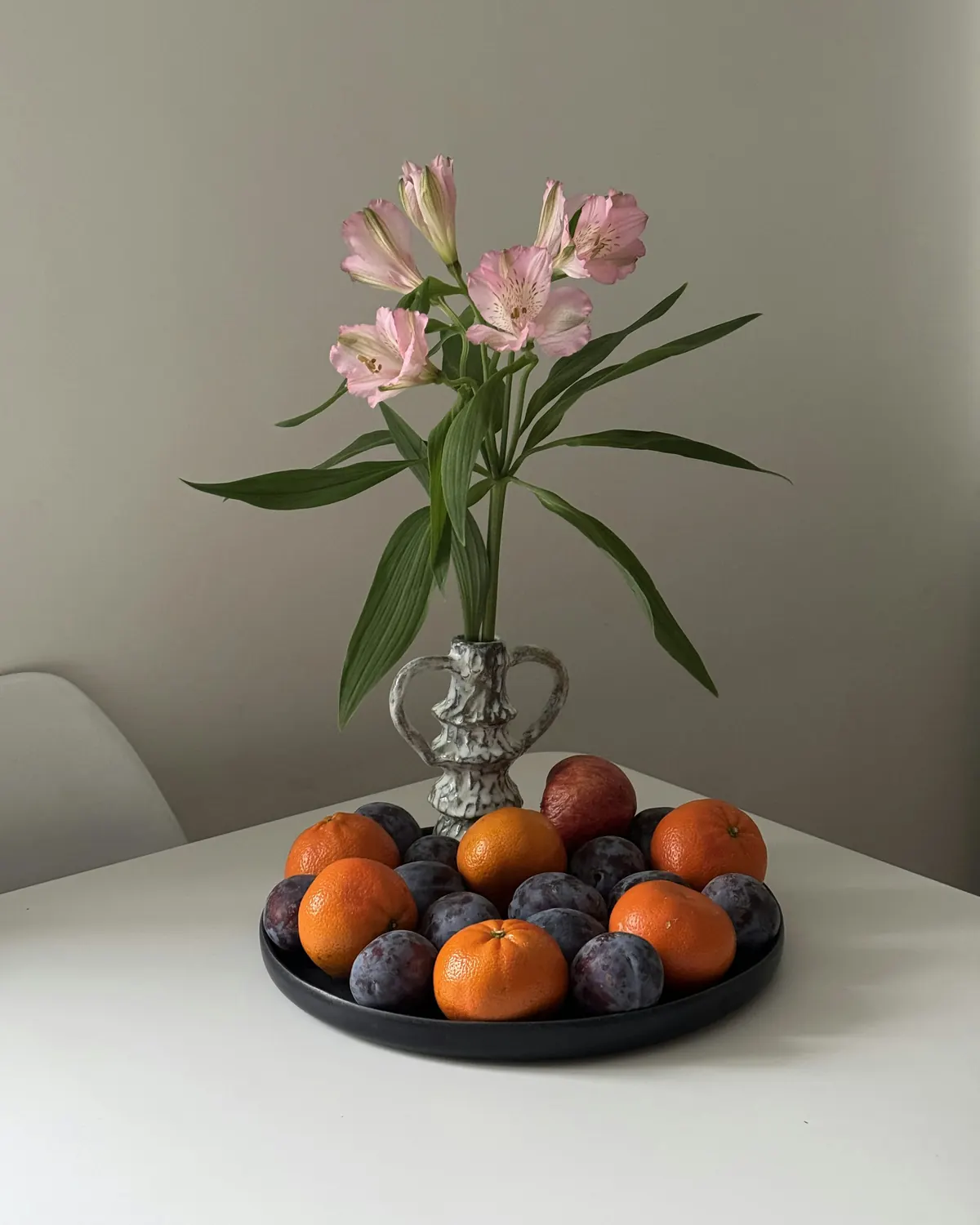
The point isn't to make less effort. It's to direct your effort toward the things that will actually make the evening enjoyable.
The relaxed host's checklist
A little planning can make room for spontaneity.
From the day before to the last song
- 1The day before
Decide where everyone will sit. Count chairs, plates, glasses, and utensils before you start decorating. Check that dietary needs and serving arrangements are covered.
- 2Earlier in the day
Choose your tablecloth or runner, gather the dishes, and clear the surface. Put serving utensils and platters together where you can find them.
- 3One hour before
Arrange the chairs and set the table, leaving space for food. Place the centerpiece and check that people can see one another across it.
- 4Thirty minutes before
Prepare water, napkins, and a clear place for serving dishes. Put away unnecessary decorative objects.
- 5Just before guests arrive
Adjust the lighting, turn on some music, and check that the entrance is welcoming.
- 6When everyone sits down
Stop rearranging. Let people move their glasses, unfold their napkins, and make themselves comfortable.
- 7After dinner
Leave a little room for lingering. Dessert, tea, conversation, or simply an evening that doesn't need to end on schedule.
Ten little gestures that change the whole table
You don't have to do all ten. Choose the ones that suit the people coming over and the way your home works.
Start with the people, not the centerpiece
Put the chairs in place before decorating. Make sure everyone can sit comfortably, pull their chair back, and reach the table. A beautiful arrangement is useless if someone has to climb over a plant to join dinner.
Let the everyday plates come to the party
Use the dishes you already own, even if they belong to different sets. Group similar shapes or colors where possible, but don't force uniformity. Christmas dinner doesn't require ten identical plates.
The napkin that doesn't need folding lessons
Lay a clean cloth napkin loosely beside each plate or simply fold it in half. A relaxed texture can feel more personal than elaborate shapes, and guests won't need instructions to use it.
Give water a proper place
Put a water glass within easy reach of every guest, with a refill jug somewhere practical. Mixed glassware is perfectly welcome. Comfort starts with the small things nobody should have to ask for.
A centerpiece from the fruit bowl
Arrange a few oranges, mandarins, or other seasonal fruit in a low bowl. Add a little suitable greenery if you have it. Keep the arrangement compact so it doesn't interrupt conversation or crowd the food.
One ribbon is enough
Reuse a ribbon to tie a loose bow around a napkin or a small vase. You don't need one on every chair, glass, and serving dish. A repeated detail is charming; an entire table dressed like a present is a little much.
A note instead of an elaborate place card
Write each guest's name on a small folded piece of paper, or add a short personal message. It's a quiet gesture that takes little time and makes everyone feel considered.
Make room for a softer glow
Use the lamps you already have to create a comfortable evening atmosphere. Keep enough light to see the food and move around safely. Avoid candles among flammable decorations or where people might reach across them.
The invisible hosting trick: an empty space
Leave one part of the table or nearby counter free for serving dishes, water, or anything that needs to move. A useful empty surface can be more valuable than another decorative object.
Let the table have a soundtrack
Choose music you enjoy and keep it low enough for conversation. You don't need a carefully curated holiday performance. A familiar song at the right moment can become one of the evening's most memorable details.
The table before and after people arrive
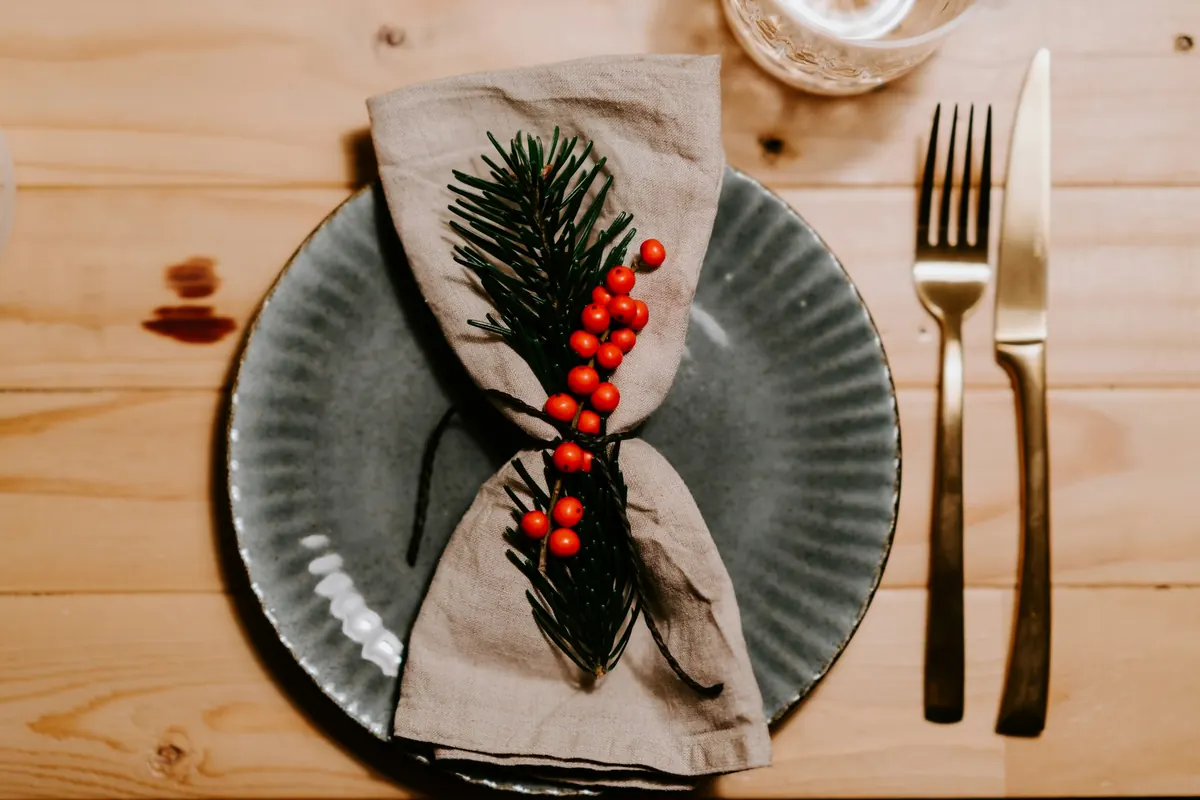
Before dinner, everything looks very promising. The napkins are clean. The fruit bowl is centered. The glasses catch the light. Even the chairs seem to be on their best behavior.
Then the guests arrive.
Someone moves a chair closer to another person. A napkin ends up beside a plate instead of on it. The centerpiece shifts to make room for a serving dish.
And the table becomes better. Not necessarily more photogenic. But more interesting.
Because now it's doing what it was prepared to do.
The best Christmas table isn't a display of everything we prepared. It's a place where everyone feels they belong.
A table with a little history
There's something especially lovely about Christmas tables that don't start from zero every December.
Maybe you bring out the same cloth each year. Perhaps one guest always sits in the same chair. There's a serving bowl that's been to more celebrations than anyone can remember, or a set of mismatched glasses that somehow became a tradition.
These things don't need to be expensive, antique, or impressive. They simply need to mean something.
That's the philosophy behind the homes we love at ORIGIN. House Studio: a space becomes personal through the ordinary things that stay, and through the lives that continue around them. It's an idea we also explore in our story about the Paris apartment and how to live its spirit rather than copy it.
22:46When the dinner is over
The fruit bowl has moved to one side. There are crumbs on the tablecloth. A ribbon has come undone, and somebody has borrowed an extra chair from another room.
No one seems in a hurry to leave. You've finally sat down.
The table isn't perfect anymore. Perhaps it never was.
But people are laughing, someone is telling a story you've heard before, and the room feels exactly as it should.
Next Christmas, you probably won't remember whether the napkins matched. You might remember who sat beside you, what everyone talked about, and how good it felt to be together.
That's the table worth setting.
Sources & notes
- This article uses no statistics. The hosting and table ideas are practical editorial suggestions, not universal etiquette rules.
- Candle safety: U.S. Fire Administration recommends keeping candles away from flammable materials, using sturdy holders and considering flameless alternatives.
- Photos (Unsplash License): Vika David, Claudio Schwarz.
17:17Nochebuena
Alguien pregunta dónde están las sillas extra. Hay una fuente en el horno, servilletas sobre la mesada y una visita que llegó antes de tiempo y quiere ayudar, aunque todavía no sabe dónde guardás nada.
La mesa sigue vacía.
Mirás el reloj. Después mirás la mesa. Y por un momento te preguntás por qué no empezaste a preparar todo tres días antes.
Pero hay algo que vale la pena recordar: las personas que vienen a cenar no esperan una fotografía perfecta. Vienen a pasar Navidad con vos.
La mesa no necesita parecer un evento formal. Necesita lugar para la comida, espacio para los brazos de todos y algunos detalles que hagan que la noche se sienta especial.
Y buena parte de esos detalles probablemente ya están en tus alacenas.
Primero, olvidate de la mesa navideña perfecta
Tenemos la costumbre de imaginar las mesas de Navidad como producciones enormes. Platos que combinan. Copas idénticas. Un centro de mesa impresionante. Servilletas dobladas de maneras tan elaboradas que nadie sabe cómo desarmarlas.
En una foto, todo se ve precioso. En la vida real puede ser bastante agotador.
Un mantel que usás desde hace años puede resultar más acogedor que uno nuevo. La vajilla de distintos juegos puede tener mucha más personalidad que una colección perfectamente coordinada. Y quizás un frutero sencillo sea todo lo que necesitás para decorar el centro.
No se trata de esforzarse menos. Se trata de dedicarle energía a lo que realmente va a hacer que la noche sea disfrutable.
La checklist de una anfitriona tranquila
Un poquito de organización puede dejarle más lugar a la espontaneidad.
Del día anterior a la última canción
- 1El día anterior
Decidí dónde se va a sentar cada persona. Contá sillas, platos, vasos y cubiertos antes de empezar a decorar. Revisá necesidades alimentarias y cómo vas a servir la comida.
- 2Durante el día
Elegí el mantel o camino de mesa, reuní la vajilla y despejá la superficie. Dejá juntas las fuentes y los utensilios que vas a necesitar.
- 3Una hora antes
Acomodá las sillas y prepará los lugares, dejando espacio para la comida. Colocá el centro de mesa y comprobá que todos puedan verse.
- 4Treinta minutos antes
Prepará el agua, las servilletas y una superficie libre para las fuentes. Guardá los adornos que estén ocupando demasiado lugar.
- 5Justo antes de que lleguen
Ajustá la iluminación, poné un poco de música y asegurate de que la entrada esté despejada y resulte agradable.
- 6Cuando todos se sienten
Dejá de acomodar. Permití que muevan los vasos, desplieguen las servilletas y se pongan cómodos.
- 7Después de cenar
Hacé lugar para quedarse conversando. Puede haber postre, café o una charla que no tenga que terminar a determinada hora.
Diez pequeños gestos que hacen la diferencia
No necesitás hacer los diez. Elegí los que tengan sentido para tu familia, tus amigos y tu casa.
Primero las personas, después los adornos
Colocá las sillas antes de decorar. Comprobá que todos puedan sentarse, correr la silla y llegar cómodamente a la mesa. Un arreglo hermoso sirve de poco si alguien tiene que esquivar una planta para cenar.
Que los platos de siempre también celebren
Usá la vajilla que ya tenés, aunque sea de distintos juegos. Podés agrupar piezas parecidas, pero no fuerces la uniformidad. La cena de Navidad no exige diez platos exactamente iguales.
Una servilleta sin instrucciones
Dejá una servilleta de tela limpia junto a cada plato o doblala simplemente por la mitad. Una textura relajada puede ser más linda que una forma complicada que nadie sabe desarmar.
Un vaso de agua para cada persona
Colocá agua al alcance de todos y una jarra para volver a servir. Las copas pueden ser distintas. La comodidad empieza por esos pequeños detalles que nadie debería tener que pedir.
Un centro de mesa que sale del frutero
Acomodá naranjas, mandarinas u otras frutas de estación en un recipiente bajo. Si tenés un poco de follaje apropiado, podés sumarlo. Dejá la composición baja para no tapar las caras ni complicar el servicio.
Un solo moño puede alcanzar
Recuperá una cinta de otro regalo y anudala alrededor de una servilleta o un florero. No necesitás moños en cada silla, copa y fuente. Un detalle que se repite es encantador; una mesa entera envuelta para regalo quizás sea demasiado.
Una nota en lugar de una tarjeta elaborada
Escribí el nombre de cada invitado en un papelito doblado o sumá una frase personal. Es un gesto sencillo que lleva poco tiempo y puede hacer que todos se sientan especialmente bienvenidos.
Una luz que invite a quedarse
Aprovechá las lámparas que ya tenés para crear una atmósfera agradable. Mantené suficiente luz para ver la comida y moverse con seguridad. Evitá velas entre adornos inflamables o donde alguien pueda tocarlas al pasar una fuente.
El secreto invisible: un lugar vacío
Reservá una parte de la mesa o la mesada para las fuentes, el agua y las cosas que van y vienen. A veces, el espacio libre es mucho más valioso que otro objeto decorativo.
Una banda sonora que acompañe
Elegí música que te guste y dejala a un volumen que permita conversar. No hace falta producir un espectáculo navideño. Una canción conocida en el momento justo puede convertirse en un lindo recuerdo.
La mesa antes y después de que lleguen todos
Antes de cenar, todo parece estar bastante bien. Las servilletas están limpias. El frutero ocupa el centro. Las copas reflejan la luz. Hasta las sillas parecen estar haciendo su mejor esfuerzo por comportarse.
Entonces llegan las visitas.
Alguien acerca su silla para hablar con otra persona. Una servilleta termina al costado del plato. El centro de mesa se corre para que entre una fuente.
Y la mesa mejora. Quizás ya no esté tan fotogénica. Pero está mucho más interesante.
Porque ahora está haciendo aquello para lo que fue preparada.
La mejor mesa de Navidad no es una exhibición de todo lo que preparamos. Es un lugar donde todos se sienten parte.
Una mesa con un poco de historia
Hay algo especialmente lindo en esas mesas navideñas que no empiezan de cero cada diciembre.
Quizás sacás siempre el mismo mantel. Tal vez alguien tiene su silla favorita. Hay una fuente que ya estuvo presente en más celebraciones de las que podemos recordar, o un conjunto de copas diferentes que terminó convirtiéndose en tradición.
Nada de eso necesita ser caro, antiguo o impresionante. Solo tiene que significar algo.
Esa es también la filosofía que nos gusta compartir desde ORIGIN. House Studio: una casa se vuelve personal a través de las cosas cotidianas que permanecen y de las vidas que siguen sucediendo alrededor. Es una mirada que exploramos también en nuestro artículo sobre el departamento parisino y cómo vivir su espíritu sin copiarlo.
22:46Cuando termina la cena
El frutero terminó en un costado. Hay migas sobre el mantel. Un moño se desató y alguien fue a buscar otra silla.
Nadie parece tener apuro por irse. Vos, finalmente, te sentaste.
La mesa ya no está perfecta. Quizás nunca lo estuvo.
Pero hay risas, alguien está contando una historia que todos escucharon antes y la casa se siente exactamente como debería sentirse.
El próximo diciembre seguramente no te acuerdes de si las servilletas combinaban. Quizás recuerdes quién se sentó a tu lado, de qué hablaron y lo lindo que fue estar juntos.
Esa es la mesa que vale la pena preparar.
Fuentes y notas
- Este artículo no usa estadísticas. Las ideas de mesa y de recibir son sugerencias editoriales prácticas, no reglas universales de protocolo.
- Velas: la U.S. Fire Administration recomienda mantenerlas lejos de materiales inflamables, usar soportes estables y considerar alternativas sin llama.
- Fotos (licencia de Unsplash): Vika David, Claudio Schwarz.